



Description
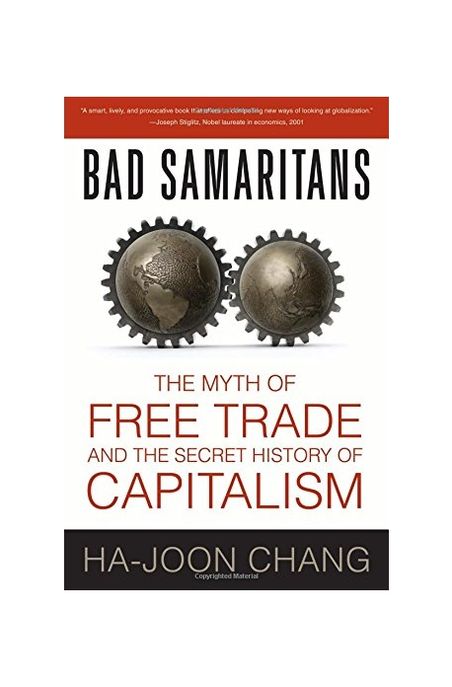
<b>신자유주의를 둘러싼 모순과 역사적 왜곡을 파헤치며 세계경제의 흐름을 다시 짚어본다 부자국가들에게 날카로운 시선을 던지는 장하준 교수의 [나쁜 사마리아인들] </b> A rising young star in the field of economics attacks the free-trade orthodoxy of The World Is Flat head-on?a crisp, contrarian history of global capitalism. One economist has called Ha-Joon Chang “the most exciting thinker our profession has turned out in the past fifteen years.” With Bad Samaritans, this provocative scholar bursts into the debate on globalization and economic justice. Using irreverent wit, an engagingly personal style, and a battery of examples, Chang blasts holes in the “World Is Flat” orthodoxy of Thomas Friedman and other liberal economists who argue that only unfettered capitalism and wide-open international trade can lift struggling nations out of poverty. On the contrary, Chang shows, today’s economic superpowers?from the U.S. to Britain to his native Korea?all attained prosperity by shameless protectionism and government intervention in industry. We have conveniently forgotten this fact, telling ourselves a fairy tale about the magic of free trade and?via our proxies such as the World Bank, International Monetary Fund, and World Trade Organization?ramming policies that suit ourselves down the throat of the developing world. Unlike typical economists who construct models of how the marketplace should work, Chang examines the past: what has actually happened. His pungently contrarian history demolishes one pillar after another of free-market mythology. We treat patents and copyrights as sacrosanct?but developed our own industries by studiously copying others’ technologies. We insist that centrally planned economies stifle growth?but many developing countries had higherGDP growth before they were pressured into deregulating their economies. Both justice and common sense, Chang argues, demand that we reevaluate the policies we force on nations that are struggling to follow in our footsteps.