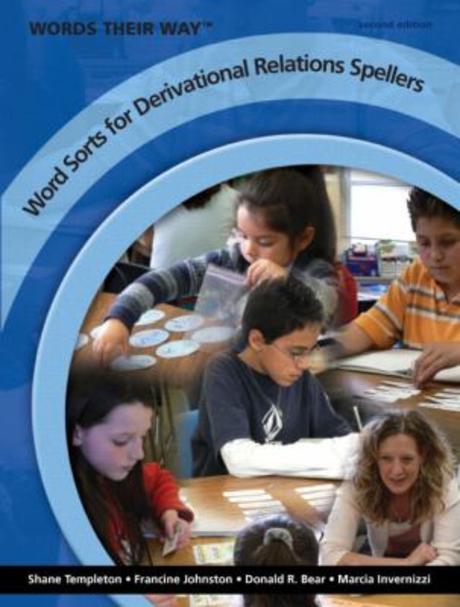


소개
Donald Bear is Director of the E. L. Cord Foundation Center for Learning and Literacy at the University of Nevada, Reno, assessing and teaching students who experience difficulties learning to read and write. Francine Johnston is Associate Professor in the School of Education at the University of North Carolina at Greensboro, where she teaches reading, language arts, and children's literature. Marcia Invernizzi is Director of the McGuffey Reading Center at the University of Virginia, exploring developmental universals in non-English orthographies. Shane Templeton is Foundation Professor of Literacy Studies at the University of Nevada, Reno. We believe that the hands-on word sorting approach to word study is invaluable to you and your students. Broaden your word study understanding and instruction with this expanded word sorting tool for week by week implementation with Derivational Relations spellers (Grades 5 - 12). This stage-specific companion volume to Words Their Way '?: Word Study for Phonics, Vocabulary, and Spelling Instruction provides a complete curriculum of reproducible sorts and detailed directions for the teacher working with students in the derivational relations stage of spelling.This second edition boasts: Targeted Learners sections that clarify which students will benefit most from the instruction Spell Checks and other Assessments available more frequently throughout High Frequency Words receive special attention We believe that the hands-on word sorting approach to word study is invaluable to you and your students. Broaden your word study understanding and instruction with this expanded word sorting tool for week by week implementation with Derivational Relations spellers (Grades 5 - 12). This stage-specific companion volume toWords Their Way ?? Word Study for Phonics, Vocabulary, and Spelling Instructionprovides a complete curriculum of reproducible sorts and detailed directions for the teacher working with students in the derivational relations stage of spelling. This second edition boasts: Targeted Learners sections that clarify which students will benefit most from the instruction Spell Checks and other Assessments available more frequently throughout High Frequency Words receive special attention We believe that the hands-on word sorting approach to word study is invaluable to you and your students. Broaden your word study understanding and instruction with this expanded word sorting tool for week by week implementation with Derivational Relations spellers (Grades 5 - 12). This stage-specific companion volume to Words Their Way ": Word Study for Phonics, Vocabulary, and Spelling Instructionprovides a complete curriculum of reproducible sorts and detailed directions for the teacher working with students in the derivational relations stage of spelling. This second edition boasts: Targeted Learners sections that clarify which students will benefit most from the instruction Spell Checks and other Assessments available more frequently throughout High Frequency Words receive special attention We believe that the hands-on word sorting approach to word study is invaluable to you and your students. Broaden your word study understanding and instruction with this expanded word sorting tool for week by week implementation with Derivational Relations spellers (Grades 5 - 12). This stage-specific companion volume to Words Their Way ?? Word Study for Phonics, Vocabulary, and Spelling Instructionprovides a complete curriculum of reproducible sorts and detailed directions for the teacher working with students in the derivational relations stage of spelling. This second edition boasts: Targeted Learners sections that clarify which students will benefit most from the instruction Spell Checks and other Assessments available more frequently throughout High Frequency Words receive special attention We believe that the hands-on word sorting approach to word study is invaluable to you and your students. Broaden your word study understanding and instruction with this expanded word sorting tool for week by week implementation with Derivational Relations spellers (Grades 5 - 12). This stage-specific companion volume toWords Their Way ?? Word Study for Phonics, Vocabulary, and Spelling Instructionprovides a complete curriculum of reproducible sorts and detailed directions for the teacher working with students in the derivational relations stage of spelling. This second edition boasts: Targeted Learners sections that clarify which students will benefit most from the instruction Spell Checks and other Assessments available more frequently throughout High Frequency Words receive special attention We believe that the hands-on word sorting approach to word study is invaluable to you and your students. Broaden your word study understanding and instruction with this expanded word sorting tool for week by week implementation with Derivational Relations spellers (Grades 5 - 12). This stage-specific companion volume toWords Their Way ?? Word Study for Phonics, Vocabulary, and Spelling Instructionprovides a complete curriculum of reproducible sorts and detailed directions for the teacher working with students in the derivational relations stage of spelling. This second edition boasts: Targeted Learners sections that clarify which students will benefit most from the instruction Spell Checks and other Assessments available more frequently throughout High Frequency Words receive special attention Responses from the field??A strength of each chapter is the Notes for the Teacher section that introduces each set of sorts. This reminds teachers about developmental appropriateness and pacing variations based on learner needs. Clearly the gradual release of responsibility model of guided instruction is promoted and reinforced throughout the text. Barbara Pettegrew, Otterbein College Chapter layout is excellent. Format is designed to include anything that might be needed for the lesson, and each takes you step by step through the process being taught, allowing time for students to internalize and firm up the skills and strategies. Susan K. McCloskey, California State University, Fresno Meet the Authors Shane Templetonis Foundation Professor of Literacy Studies at the University of Nevada, Reno. A former classroom teacher at the primary and secondary levels, he researches the development of orthographic and vocabulary knowledge. Francine Johnstonis Associate Professor in the School of Education at the University of North Carolina at Greensboro, where she teaches reading, language arts, and children's literature. A former first-grade teacher and reading specialist. Donald Bearis Director of the E.L. Cord Foundation Center for Learning and Literacy at the University of Nevada, Reno, assessing and teaching students who experience difficulties learning to read and write. A former preschool and elementary teacher, Donald currently researches literacy development with a special interest in students who speak languages other than English, and he partners with schools and districts to consider assessment and literacy instruction. Marcia Invernizziis Director of the McGuffey Reading Center at the University of Virginia exploring developmental universals in non-English orthographies. A former English and reading teacher, Marcia works with children experiencing difficulties learning to read and write in intervention programs such as Virginia's Early Intervention Reading Initiative and Book Buddies For Professional Development Resources, visit www.allynbaconmerrill.com . For College Resources, visit www.pearsonhighered.com This title provides word study for advanced readers and writers in the derivational relations stage of spelling development. It focuses on spelling and vocabulary knowledge that grow through processes of derivation - from a single base word or word root to a number of related words derived through the addition of prefixes and suffixes. Meet the Authors Shane Templetonis Foundation Professor of Literacy Studies at the University of Nevada, Reno. A former classroom teacher at the primary and secondary levels, he researches the development of orthographic and vocabulary knowledge. Francine Johnstonis Associate Professor in the School of Education at the University of North Carolina at Greensboro, where she teaches reading, language arts, and children's literature. A former first-grade teacher and reading specialist. Donald Bear is director of the E. L. Cord Foundation Center for Learning and Literacy where he and preservice, Master's and doctoral students teach and assess children who struggle to learn to read and write. Donald is a professor in the Department of Educational Specialties in the College of Education at the University of Nevada, Reno. Donald has been a classroom teacher and he researches and writes about literacy development and instruction. He is an author of numerous articles, book chapters, and books, including Words Their Way, Words Their Way with English Learners, and Vocabulary Their Way. Marcia Invernizziis Director of the McGuffey Reading Center at the University of Virginia exploring developmental universals in non-English orthographies. A former English and reading teacher, Marcia works with children experiencing difficulties learning to read and write in intervention programs such as Virginia's Early Intervention Reading Initiative and Book Buddies Words Their Way '? companion volumes, 2e We believe that the hands-on word sorting approach to word study is invaluable to you and your students. These stage-specific companion volumes to Words Their Way: Word Study for Phonics, Vocabulary, and Spelling Instruction provide a complete curriculum of reproducible sorts and detailed directions for the teacher working with students in each stage of spelling development, from emergent through derivational relations. NEW! All second editions boast Literature Connections making links between features being studies and valuable children's literature Targeted Learners sections that clarify which students will benefit most from the instruction Spell Checks and other Assessments available more frequently throughout High Frequency Words receive special attention This companion volume, the last in the series, provides word study for advanced readers and writers in the derivational relations stage of spelling development (Grades 5 - 12). The text focuses on spelling and vocabulary knowledge that grow primarily through processes of derivation from a single base word or word root to a number of related words derived through the addition of prefixes and suffixes. Additionally, students explore word origins and word spelling-meaning relationships. Words Their Way '? companion volumes, 2eWe believe that the hands-on word sorting approach to word study is invaluable to you and your students. These stage-specific companion volumes to Words Their Way: Word Study for Phonics, Vocabulary, and Spelling Instruction provide a complete curriculum of reproducible sorts and detailed directions for the teacher working with students in each stage of spelling development, from emergent through derivational relations.NEW! All second editions boast Literature Connections making links between features being studies and valuable children's literature Targeted Learners sections that clarify which students will benefit most from the instruction Spell Checks and other Assessments available more frequently throughout High Frequency Words receive special attentionThis companion volume, the last in the series, provides word study for advanced readers and writers in the derivational relations stage of spelling development (Grades 5 - 12). The text focuses on spelling and vocabulary knowledge that grow primarily through processes of derivation from a single base word or word root to a number of related words derived through the addition of prefixes and suffixes. Additionally, students explore word origins and word spelling-meaning relationships. Words Their Way companion volumes, 2e We believe that the hands-on word sorting approach to word study is invaluable to you and your students. These stage-specific companion volumes to Words Their Way: Word Study for Phonics, Vocabulary, and Spelling Instruction provide a complete curriculum of reproducible sorts and detailed directions for the teacher working with students in each stage of spelling development, from emergent through derivational relations. NEW! All second editions boast Literature Connections making links between features being studies and valuable children s literature Targeted Learners sections that clarify which students will benefit most from the instruction Spell Checks and other Assessments available more frequently throughout High Frequency Words receive special attention This companion volume, the last in the series, provides word study for advanced readers and writers in the derivational relations stage of spelling development (Grades 5 12). The text focuses on spelling and vocabulary knowledge that grow primarily through processes of derivation from a single base word or word root to a number of related words derived through the addition of prefixes and suffixes. Additionally, students explore word origins and word spelling-meaning relationships. Words Their Way companion volumes, 2e We believe that the hands-on word sorting approach to word study is invaluable to you and your students. These stage-specific companion volumes to Words Their Way: Word Study for Phonics, Vocabulary, and Spelling Instruction provide a complete curriculum of reproducible sorts and detailed directions for the teacher working with students in each stage of spelling development, from emergent through derivational relations. NEW! All second editions boast Literature Connections making links between features being studies and valuable childrens literature Targeted Learners sections that clarify which students will benefit most from the instruction Spell Checks and other Assessments available more frequently throughout High Frequency Words receive special attention This companion volume, the last in the series, provides word study for advanced readers and writers in the derivational relations stage of spelling development (Grades 5 12). The text focuses on spelling and vocabulary knowledge that grow primarily through processes of derivationfrom a single base word or word root to a number of related words derived through the addition of prefixes and suffixes. Additionally, students explore word origins and word spelling-meaning relationships. Words Their Way '? companion volumes, 2eWe believe that the hands-on word sorting approach to word study is invaluable to you and your students. These stage-specific companion volumes to Words Their Way: Word Study for Phonics, Vocabulary, and Spelling Instruction provide a complete curriculum of reproducible sorts and detailed directions for the teacher working with students in each stage of spelling development, from emergent through derivational relations.NEW! All second editions boast Literature Connections making links between features being studies and valuable children's literature Targeted Learners sections that clarify which students will benefit most from the instruction Spell Checks and other Assessments available more frequently throughout High Frequency Words receive special attentionThis companion volume, the last in the series, provides word study for advanced readers and writers in the derivational relations stage of spelling development (Grades 5 - 12). The text focuses on spelling and vocabulary knowledge that grow primarily through processes of derivation from a single base word or word root to a number of related words derived through the addition of prefixes and suffixes. Additionally, students explore word origins and word spelling-meaning relationships. Words Their Way '? companion volumes, 2e We believe that the hands-on word sorting approach to word study is invaluable to you and your students. These stage-specific companion volumes to Words Their Way: Word Study for Phonics, Vocabulary, and Spelling Instruction provide a complete curriculum of reproducible sorts and detailed directions for the teacher working with students in each stage of spelling development, from emergent through derivational relations. This companion volume, the last in the series, provides word study for advanced readers and writers in the derivational relations stage of spelling development (Grades 5 - 12). The text focuses on spelling and vocabulary knowledge that grow primarily through processes of derivation from a single base word or word root to a number of related words derived through the addition of prefixes and suffixes. Additionally, students explore word origins and word spelling-meaning relationships. Words Their Way companion volumes, 2e We believe that the hands-on word sorting approach to word study is invaluable to you and your students. These stage-specific companion volumes to Words Their Way: Word Study for Phonics, Vocabulary, and Spelling Instruction provide a complete curriculum of reproducible sorts and detailed directions for the teacher working with students in each stage of spelling development, from emergent through derivational relations. This companion volume, the last in the series, provides word study for advanced readers and writers in the derivational relations stage of spelling development (Grades 5 12). The text focuses on spelling and vocabulary knowledge that grow primarily through processes of derivation from a single base word or word root to a number of related words derived through the addition of prefixes and suffixes. Additionally, students explore word origins and word spelling-meaning relationships. Words Their Way companion volumes, 2e We believe that the hands-on word sorting approach to word study is invaluable to you and your students. These stage-specific companion volumes to Words Their Way: Word Study for Phonics, Vocabulary, and Spelling Instruction provide a complete curriculum of reproducible sorts and detailed directions for the teacher working with students in each stage of spelling development, from emergent through derivational relations. This companion volume, the last in the series, provides word study for advanced readers and writers in the derivational relations stage of spelling development (Grades 5 12). The text focuses on spelling and vocabulary knowledge that grow primarily through processes of derivationfrom a single base word or word root to a number of related words derived through the addition of prefixes and suffixes. Additionally, students explore word origins and word spelling-meaning relationships. Provided for advanced readers and writers, this companion volume provides teachers with prepared reproducible sorts and step-by-step directions to guide students through the sorting lessons. This companion volume focuses on spelling and vocabulary knowledge that grow primarily through processes of derivation. Designed for elementary educators'use as part of a reading curriculum where derivational relations is covered. Words Their Way " companion volumes, 2e We believe that the hands-on word sorting approach to word study is invaluable to you and your students. These stage-specific companion volumes to Words Their Way: Word Study for Phonics, Vocabulary, and Spelling Instructionprovide a complete curriculum of reproducible sorts and detailed directions for the teacher working with students in each stage of spelling development, from emergent through derivational relations. NEW!All second editions boast Literature Connections making links between features being studies and valuable children?? literature Targeted Learners sections that clarify which students will benefit most from the instruction Spell Checks and other Assessments available more frequently throughout High Frequency Words receive special attention This companion volume, the last in the series, provides word study for advanced readers and writers in the derivational relations stage of spelling development (Grades 5 ??12). The text focuses on spelling and vocabulary knowledge that grow primarily through processes of derivation-from a single base word or word root to a number of related words derived through the addition of prefixes and suffixes. Additionally, students explore word origins and word spelling-meaning relationships. Words Their Way ??companion volumes, 2e We believe that the hands-on word sorting approach to word study is invaluable to you and your students. These stage-specific companion volumes to Words Their Way: Word Study for Phonics, Vocabulary, and Spelling Instructionprovide a complete curriculum of reproducible sorts and detailed directions for the teacher working with students in each stage of spelling development, from emergent through derivational relations. NEW!All second editions boast Literature Connections making links between features being studies and valuable children's literature Targeted Learners sections that clarify which students will benefit most from the instruction Spell Checks and other Assessments available more frequently throughout High Frequency Words receive special attention This companion volume, the last in the series, provides word study for advanced readers and writers in the derivational relations stage of spelling development (Grades 5 12). The text focuses on spelling and vocabulary knowledge that grow primarily through processes of derivation-from a single base word or word root to a number of related words derived through the addition of prefixes and suffixes. Additionally, students explore word origins and word spelling-meaning relationships. Responses from the field??A strength of each chapter is the Notes for the Teacher section that introduces each set of sorts. This reminds teachers about developmental appropriateness and pacing variations based on learner needs. Clearly the gradual release of responsibility model of guided instruction is promoted and reinforced throughout the text. Barbara Pettegrew, Otterbein College Chapter layout is excellent. Format is designed to include anything that might be needed for the lesson, and each takes you step by step through the process being taught, allowing time for students to internalize and firm up the skills and strategies. Susan K. McCloskey, California State University, Fresno Responses from the field& A strength of each chapter is the Notes for the Teacher section that introduces each set of sorts. This reminds teachers about developmental appropriateness and pacing variations based on learner needs. Clearly the gradual release of responsibility model of guided instruction is promoted and reinforced throughout the text. Barbara Pettegrew, Otterbein College Chapter layout is excellent. Format is designed to include anything that might be needed for the lesson, and each takes you step by step through the process being taught, allowing time for students to internalize and firm up the skills and strategies. Susan K. McCloskey, California State University, Fresno Responses from the field??A strength of each chapter is the Notes for the Teacher section that introduces each set of sorts. This reminds teachers about developmental appropriateness and pacing variations based on learner needs. Clearly the gradual release of responsibility model of guided instruction is promoted and reinforced throughout the text. Barbara Pettegrew, Otterbein College Chapter layout is excellent. Format is designed to include anything that might be needed for the lesson, and each takes you step by step through the process being taught, allowing time for students to internalize and firm up the skills and strategies. Susan K. McCloskey, California State University, Fresno Responses from the field A strength of each chapter is the Notes for the Teacher section that introduces each set of sorts. This reminds teachers about developmental appropriateness and pacing variations based on learner needs. Clearly the gradual release of responsibility model of guided instruction is promoted and reinforced throughout the text. Barbara Pettegrew, Otterbein College Chapter layout is excellent. Format is designed to include anything that might be needed for the lesson, and each takes you step by step through the process being taught, allowing time for students to internalize and firm up the skills and strategies. Susan K. McCloskey, California State University, Fresno Responses from the field... A strength of each chapter is the Notes for the Teacher section that introduces each set of sorts. This reminds teachers about developmental appropriateness and pacing variations based on learner needs. Clearly the gradual release of responsibility model of guided instruction is promoted and reinforced throughout the text. Barbara Pettegrew, Otterbein College Chapter layout is excellent. Format is designed to include anything that might be needed for the lesson, and each takes you step by step through the process being taught, allowing time for students to internalize and firm up the skills and strategies. Susan K. McCloskey, California State University, Fresno Responses from the field...A strength of each chapter is the Notes for the Teacher section that introduces each set of sorts. This reminds teachers about developmental appropriateness and pacing variations based on learner needs. Clearly the gradual release of responsibility model of guided instruction is promoted and reinforced throughout the text.Barbara Pettegrew, Otterbein CollegeChapter layout is excellent. Format is designed to include anything that might be needed for the lesson, and each takes you step by step through the process being taught, allowing time for students to internalize and firm up the skills and strategies.Susan K. McCloskey, California State University, Fresno Unit I: Prefixes Sort 1 Prefixes (in-,un-,dis-,mis-) Sort 2 Prefixes (pre-,post-,fore-,after-) Sort 3 Prefixes (re-, ex-, in-, de-) Sort 4 Prefixes (sub-, com-, pro-, en-) Assessment for Sorts 1 -4 Unit II: Derivational Suffixes Sort 5 Suffixes (-y and -ly) Sort 6 comparative suffixes (-er, -est, -iest, -ier) Sort 7 Noun Suffixes (-er, -or, -ist, -ian) Suffixes (-ment, -less, -ness) Sort 9 Siffixes (-ary, -ery, -ory) Sort 10 Suffixes (-ty and -ity) Sort 11 suffixes (-al, -ial, -ic) Sort 12 Adjective Suffixes (-ful, -ous, -ious) Sort 13 Ver b Suffixes (-en, -ize, -ify) Assessment for Sorts 5 - 13 Unit III: The Suffix -ion Sort 14 Adding -ionto Base Words, No Spelling Change Sort 15 Adding -ionand -ian, no spelling change Sort 16 Adding -ion;e-drop and Spelling Change Sort 17 Adding -ation, -cation, and -ition Assessment for Sorts 14 - 17 Unit IV: Spelling-Meaning Patterns Sort 18 Consonant Alternation Sort 19 Vowel Alternation - Long to Short Sort 20 Vowel Alternation - Long to Short/Schwa Sort 21 Adding Suffixe -ity: Vowel Alternation, Schwa to Short Sort 22 Vowel Alternation, Long, Short, and Schwa Sort 23 Adding -ion: Vowel Alternation - Spelling Change Sort 24 Multiple Vowel Alternations Assessment for Sorts 18 - 24 Unit V: Greek and Latin Elements I Sort 25 Greek Number Prefixes mono- , uni-, bi-, tri-) Sort 26 More Number Prefixes Sort 27 Greek and Latin Elements: Size (micro-, mega-, super- hyper-) Sort 28 Greek Roots (tle, phon, photo, graph) Sort 29 More Greek Roots (geo, therm, scope, meter, logy) Sort 30 Latin Roots (spect, port, form) Sort 31 Latin Roots (dic, aud, vis) Sort 32 Latin Roots (gress, rupt, tract, mot) Sort 33 Latin Roots (fract, flect.flex, ject, mist./mit) Sort 34 Latin Roots (man, scrib/script, cred, fac) Assessment for Sorts 25 - 34 Unit VI: Greek and Latin Elements II Sort 35 Latin Roots (duc/duct, sequ/sec, flu, ver/vert) Sort 36 Latin Roots ( bene, mal) and Prefixes (ante-, post-) Sort 37 Greek and Latin Elements: Amount (magni, min, poly, omni) Sort 38 Greek and Latin Elements: Body (cap, corp, dent/don't, ped/pod) Sort 39 Greek and Latin Elements: (terr, astr/aster, hydra/hydro, bio) Sort 40 Latin Roots (gen, mort, bio) Sort 41 Latin Roots (ven/vent, junct, spir, sec/sect) So Unit I: Prefixes Sort 1 Prefixes (in-, un-, dis-, mis-) Sort 2 Prefixes (pre-, post-, fore-, after-) Sort 3 Prefixes (re-, ex-, in-, de-) Sort 4 Prefixes (sub-, com-, pro-, en-) Assessment for Sorts 1 -4 Unit II: Derivational Suffixes Sort 5 Suffixes (-y and ly) Sort 6 comparative suffixes (-er, -est, -iest, -ier) Sort 7 Noun Suffixes (-er, -or, -ist, -ian) Suffixes (-ment, -less, -ness) Sort 9 Siffixes (-ary, -ery, -ory) Sort 10 Suffixes (-ty and ity) Sort 11 suffixes (-al, -ial, -ic) Sort 12 Adjective Suffixes (-ful, -ous, -ious) Sort 13 Ver b Suffixes (-en, -ize, -ify) Assessment for Sorts 5 13 Unit III: The Suffix -ion Sort 14 Adding ion to Base Words, No Spelling Change Sort 15 Adding ion and ian, no spelling change Sort 16 Adding ion; e-drop and Spelling Change Sort 17 Adding ation, -cation, and ition Assessment for Sorts 14 - 17 Unit IV: Spelling-Meaning Patterns Sort 18 Consonant Alternation Sort 19 Vowel Alternation Long to Short Sort 20 Vowel Alternation Long to Short/Schwa Sort 21 Adding Suffixe -ity: Vowel Alternation, Schwa to Short Sort 22 Vowel Alternation, Long, Short, and Schwa Sort 23 Adding -ion: Vowel Alternation Spelling Change Sort 24 Multiple Vowel Alternations Assessment for Sorts 18 - 24 Unit V: Greek and Latin Elements I Sort 25 Greek Number Prefixes mono-, uni-, bi-, tri-) Sort 26 More Number Prefixes Sort 27 Greek and Latin Elements: Size (micro-, mega-, super- hyper-) Sort 28 Greek Roots (tle, phon, photo, graph) Sort 29 More Greek Roots (geo, therm, scope, meter, logy) Sort 30 Latin Roots (spect, port, form) Sort 31 Latin Roots (dic, aud, vis) Sort 32 Latin Roots (gress, rupt, tract, mot) Sort 33 Latin Roots (fract, flect.flex, ject, mist./mit) Sort 34 Latin Roots (man, scrib/script, cred, fac) Assessment for Sorts 25 - 34 Unit VI: Greek and Latin Elements II Sort 35 Latin Roots (duc/duct, sequ/sec, flu, ver/vert) Sort 36 Latin Roots ( bene, mal) and Prefixes (ante-, post-) Sort 37 Greek and Latin Elements: Amount (magni, min, poly, omni) Sort 38 Greek and Latin Elements: Body (cap, corp, dent/don't, ped/pod) Sort 39 Greek and Latin Elements: (terr, astr/aster, hydra/hydro, bio) Sort 40 Latin Roots (gen, mort, bio) Sort 41 Latin Roots (ven/vent, junct, spir, sec/sect) Sort 42 Latin Roots (jud, leg, mod, biblio) Assessment for Sorts 35 - 42 Unit VII: Greek and Latin Elements III Sort 43 Latin and Latin Roots (voc, ling/lang, mem, psych) Sort 44 Greek and Latin Roots (path, sens/sent, med/medi, sol) Sort 45 Prefixes (intra-, inter-, intro-, circum-) Sort 46 Latin Roots (press, pur/purg, fus, pend) Sort 47 Latin Roots (pos, loc, sist, sta/stat/stit) Sort 48 Latin Roots (ced/cess/ceed, ten/tend, lit) Sort 49 Predictable Spelling Changes in Word Roots (ceive/cept, tain/ten, nounce/nun) Assessemnt for Sorts 43 - 49 Unit VIII: Advanced Spelling-Meaning Patterns Sort 50 Suffixes (-ent/-ence, -ant/-ance) Sort 51 Suffixes (-ent/-ence/-ency, -ant/-ance/-ancy) Sort 52 Suffixes (--able, -ible) Sort 53 Adding -able (e-drop and y to i) Sort 54 Accent and Doubling Sort 55 Words from French Assessment for Sorts 50 54 Unit IX: Prefix Assimilation Sort 56 Prefix Assimi Unit I: Prefixes Sort 1 Prefixes (in-, un-, dis-, mis-) Sort 2 Prefixes (pre-, post-, fore-, after-) Sort 3 Prefixes (re-, ex-, in-, de-) Sort 4 Prefixes (sub-, com-, pro-, en-) Assessment for Sorts 1 -4 Unit II: Derivational Suffixes Sort 5 Suffixes (-y and ly) Sort 6 comparative suffixes (-er, -est, -iest, -ier) Sort 7 Noun Suffixes (-er, -or, -ist, -ian) Suffixes (-ment, -less, -ness) Sort 9 Siffixes (-ary, -ery, -ory) Sort 10 Suffixes (-ty and ity) Sort 11 suffixes (-al, -ial, -ic) Sort 12 Adjective Suffixes (-ful, -ous, -ious) Sort 13 Ver b Suffixes (-en, -ize, -ify) Assessment for Sorts 5 13 Unit III: The Suffix -ion Sort 14 Adding ion to Base Words, No Spelling Change Sort 15 Adding ion and ian, no spelling change Sort 16 Adding ion; e-drop and Spelling Change Sort 17 Adding ation, -cation, and ition Assessment for Sorts 14 - 17 Unit IV: Spelling-Meaning Patterns Sort 18 Consonant Alternation Sort 19 Vowel Alternation Long to Short Sort 20 Vowel Alternation Long to Short/Schwa Sort 21 Adding Suffixe -ity: Vowel Alternation, Schwa to Short Sort 22 Vowel Alternation, Long, Short, and Schwa Sort 23 Adding -ion: Vowel Alternation Spelling Change Sort 24 Multiple Vowel Alternations Assessment for Sorts 18 - 24 Unit V: Greek and Latin Elements I Sort 25 Greek Number Prefixes mono-, uni-, bi-, tri-) Sort 26 More Number Prefixes Sort 27 Greek and Latin Elements: Size (micro-, mega-, super- hyper-) Sort 28 Greek Roots (tle, phon, photo, graph) Sort 29 More Greek Roots (geo, therm, scope, meter, logy) Sort 30 Latin Roots (spect, port, form) Sort 31 Latin Roots (dic, aud, vis) Sort 32 Latin Roots (gress, rupt, tract, mot) Sort 33 Latin Roots (fract, flect.flex, ject, mist./mit) Sort 34 Latin Roots (man, scrib/script, cred, fac) Assessment for Sorts 25 - 34 Unit VI: Greek and Latin Elements II Sort 35 Latin Roots (duc/duct, sequ/sec, flu, ver/vert) Sort 36 Latin Roots ( bene, mal) and Prefixes (ante-, post-) Sort 37 Greek and Latin Elements: Amount (magni, min, poly, omni) Sort 38 Greek and Latin Elements: Body (cap, corp, dent/don t, ped/pod) Sort 39 Greek and Latin Elements: (terr, astr/aster, hydra/hydro, bio) Sort 40 Latin Roots (gen, mort, bio) Sort 41 Latin Roots (ven/vent, junct, spir, sec/sect) Sort 42 Latin Roots (jud, leg, mod, biblio) Assessment for Sorts 35 - 42 Unit VII: Greek and Latin Elements III Sort 43 Latin and Latin Roots (voc, ling/lang, mem, psych) Sort 44 Greek and Latin Roots (path, sens/sent, med/medi, sol) Sort 45 Prefixes (intra-, inter-, intro-, circum-) Sort 46 Latin Roots (press, pur/purg, fus, pend) Sort 47 Latin Roots (pos, loc, sist, sta/stat/stit) Sort 48 Latin Roots (ced/cess/ceed, ten/tend, lit) Sort 49 Predictable Spelling Changes in Word Roots (ceive/cept, tain/ten, nounce/nun) Assessemnt for Sorts 43 - 49 Unit VIII: Advanced Spelling-Meaning Patterns Sort 50 Suffixes (-ent/-ence, -ant/-ance) Sort 51 Suffixes (-ent/-ence/-ency, -ant/-ance/-ancy) Sort 52 Suffixes (--able, -ible) Sort 53 Adding -able (e-drop and y to i) Sort 54 Accent and Doubling Sort 55 Words from French Assessment for Sorts 50 54 Unit IX: Prefix Assimilation Sort 56 Prefix Assimilation: in- Sort 57 Prefix Assimilation: com- Sort 58 Prefix Assimilation: sub- Sort 59 Prefix Assimilation: ex- and ob Sort 60 Prefix Assimilation: ad- Assessment for Sorts 56 - 60 < Unit I: Prefixes Sort 1 Prefixes (in-, un-, dis-, mis-) Sort 2 Prefixes (pre-, post-, fore-, after-) Sort 3 Prefixes (re-, ex-, in-, de-) Sort 4 Prefixes (sub-, com-, pro-, en-) Assessment for Sorts 1 -4 Unit II: Derivational Suffixes Sort 5 Suffixes (-y and ly) Sort 6 comparative suffixes (-er, -est, -iest, -ier) Sort 7 Noun Suffixes (-er, -or, -ist, -ian) Suffixes (-ment, -less, -ness) Sort 9 Siffixes (-ary, -ery, -ory) Sort 10 Suffixes (-ty and ity) Sort 11 suffixes (-al, -ial, -ic) Sort 12 Adjective Suffixes (-ful, -ous, -ious) Sort 13 Ver b Suffixes (-en, -ize, -ify) Assessment for Sorts 5 13 Unit III: The Suffix -ion Sort 14 Adding ion to Base Words, No Spelling Change Sort 15 Adding ion and ian, no spelling change Sort 16 Adding ion; e-drop and Spelling Change Sort 17 Adding ation, -cation, and ition Assessment for Sorts 14 - 17 Unit IV: Spelling-Meaning Patterns Sort 18 Consonant Alternation Sort 19 Vowel Alternation Long to Short Sort 20 Vowel Alternation Long to Short/Schwa Sort 21 Adding Suffixe -ity: Vowel Alternation, Schwa to Short Sort 22 Vowel Alternation, Long, Short, and Schwa Sort 23 Adding -ion: Vowel Alternation Spelling Change Sort 24 Multiple Vowel Alternations Assessment for Sorts 18 - 24 Unit V: Greek and Latin Elements I Sort 25 Greek Number Prefixes mono-, uni-, bi-, tri-) Sort 26 More Number Prefixes Sort 27 Greek and Latin Elements: Size (micro-, mega-, super- hyper-) Sort 28 Greek Roots (tle, phon, photo, graph) Sort 29 More Greek Roots (geo, therm, scope, meter, logy) Sort 30 Latin Roots (spect, port, form) Sort 31 Latin Roots (dic, aud, vis) Sort 32 Latin Roots (gress, rupt, tract, mot) Sort 33 Latin Roots (fract, flect.flex, ject, mist./mit) Sort 34 Latin Roots (man, scrib/script, cred, fac) Assessment for Sorts 25 - 34 Unit VI: Greek and Latin Elements II Sort 35 Latin Roots (duc/duct, sequ/sec, flu, ver/vert) Sort 36 Latin Roots ( bene, mal) and Prefixes (ante-, post-) Sort 37 Greek and Latin Elements: Amount (magni, min, poly, omni) Sort 38 Greek and Latin Elements: Body (cap, corp, dent/don't, ped/pod) Sort 39 Greek and Latin Elements: (terr, astr/aster, hydra/hydro, bio) Sort 40 Latin Roots (gen, mort, bio) Sort 41 Latin Roots (ven/vent, junct, spir, sec/sect) Sort 42 Latin Roots (jud, leg, mod, biblio) Assessment for Sorts 35 - 42 Unit VII: Greek and Latin Elements III Sort 43 Latin and Latin Roots (voc, ling/lang, mem, psych) Sort 44 Greek and Latin Roots (path, sens/sent, med/medi, sol) Sort 45 Prefixes (intra-, inter-, intro-, circum-) Sort 46 Latin Roots (press, pur/purg, fus, pend) Sort 47 Latin Roots (pos, loc, sist, sta/stat/stit) Sort 48 Latin Roots (ced/cess/ceed, ten/tend, lit) Sort 49 Predictable Spelling Changes in Word Roots (ceive/cept, tain/ten, nounce/nun) Assessemnt for Sorts 43 - 49 Unit VIII: Advanced Spelling-Meaning Patterns Sort 50 Suffixes (-ent/-ence, -ant/-ance) Sort 51 Suffixes (-ent/-ence/-ency, -ant/-ance/-ancy) Sort 52 Suffixes (--able, -ible) Sort 53 Adding -able (e-drop and y to i) Sort 54 Accent and Doubling Sort 55 Words from French Assessment for Sorts 50 54 Unit IX: Prefix Assimilation Sort 56 Prefix Assimilation: in- Sort 57 Prefix Assimilation: com- Sort 58 Prefix Assimilation: sub- Sort 59 Prefix Assimilation: ex- and ob Sort 60 Prefix Assimilation: ad- Assessment for Sorts 56 - 60 < Unit I: Prefixes Sort 1 Prefixes (in-, un-, dis-, mis-) Sort 2 Prefixes (pre-, post-, fore-, after-) Sort 3 Prefixes (re-, ex-, in-, de-) Sort 4 Prefixes (sub-, com-, pro-, en-) Assessment for Sorts 1 -4 Unit II: Derivational Suffixes Sort 5 Suffixes (-y and ly) Sort 6 comparative suffixes (-er, -est, -iest, -ier) Sort 7 Noun Suffixes (-er, -or, -ist, -ian) Suffixes (-ment, -less, -ness) Sort 9 Siffixes (-ary, -ery, -ory) Sort 10 Suffixes (-ty and ity) Sort 11 suffixes (-al, -ial, -ic) Sort 12 Adjective Suffixes (-ful, -ous, -ious) Sort 13 Ver b Suffixes (-en, -ize, -ify) Assessment for Sorts 5 13 Unit III: The Suffix -ion Sort 14 Adding ion to Base Words, No Spelling Change Sort 15 Adding ion and ian, no spelling change Sort 16 Adding ion; e-drop and Spelling Change Sort 17 Adding ation, -cation, and ition Assessment for Sorts 14 - 17 Unit IV: Spelling-Meaning Patterns Sort 18 Consonant Alternation Sort 19 Vowel Alternation Long to Short Sort 20 Vowel Alternation Long to Short/Schwa Sort 21 Adding Suffixe -ity: Vowel Alternation, Schwa to Short Sort 22 Vowel Alternation, Long, Short, and Schwa Sort 23 Adding -ion: Vowel Alternation Spelling Change Sort 24 Multiple Vowel Alternations Assessment for Sorts 18 - 24 Unit V: Greek and Latin Elements I Sort 25 Greek Number Prefixes mono-, uni-, bi-, tri-) Sort 26 More Number Prefixes Sort 27 Greek and Latin Elements: Size (micro-, mega-, super- hyper-) Sort 28 Greek Roots (tle, phon, photo, graph) Sort 29 More Greek Roots (geo, therm, scope, meter, logy) Sort 30 Latin Roots (spect, port, form) Sort 31 Latin Roots (dic, aud, vis) Sort 32 Latin Roots (gress, rupt, tract, mot) Sort 33 Latin Roots (fract, flect.flex, ject, mist./mit) Sort 34 Latin Roots (man, scrib/script, cred, fac) Assessment for Sorts 25 - 34 Unit VI: Greek and Latin Elements II Sort 35 Latin Roots (duc/duct, sequ/sec, flu, ver/vert) Sort 36 Latin Roots ( bene, mal) and Prefixes (ante-, post-) Sort 37 Greek and Latin Elements: Amount (magni, min, poly, omni) Sort 38 Greek and Latin Elements: Body (cap, corp, dent/dont, ped/pod) Sort 39 Greek and Latin Elements: (terr, astr/aster, hydra/hydro, bio) Sort 40 Latin Roots (gen, mort, bio) Sort 41 Latin Roots (ven/vent, junct, spir, sec/sect) Sort 42 Latin Roots (jud, leg, mod, biblio) Assessment for Sorts 35 - 42 Unit VII: Greek and Latin Elements III Sort 43 Latin and Latin Roots (voc, ling/lang, mem, psych) Sort 44 Greek and Latin Roots (path, sens/sent, med/medi, sol) Sort 45 Prefixes (intra-, inter-, intro-, circum-) Sort 46 Latin Roots (press, pur/purg, fus, pend) Sort 47 Latin Roots (pos, loc, sist, sta/stat/stit) Sort 48 Latin Roots (ced/cess/ceed, ten/tend, lit) Sort 49 Predictable Spelling Changes in Word Roots (ceive/cept, tain/ten, nounce/nun) Assessemnt for Sorts 43 - 49 Unit VIII: Advanced Spelling-Meaning Patterns Sort 50 Suffixes (-ent/-ence, -ant/-ance) Sort 51 Suffixes (-ent/-ence/-ency, -ant/-ance/-ancy) Sort 52 Suffixes (--able, -ible) Sort 53 Adding -able (e-drop and y to i) Sort 54 Accent and Doubling Sort 55 Words from French Assessment for Sorts 50 54 Unit IX: Prefix Assimilation Sort 56 Prefix Assimilation: in- Sort 57 Prefix Assimilation: com- Sort 58 Prefix Assimilation: sub- Sort 59 Prefix Assimilation: ex- and ob Sort 60 Prefix Assimilation: ad- Assessment for Sorts 56 - 60 </ Unit I: PrefixesSort 1 Prefixes (in-, un-, dis-, mis-)Sort 2 Prefixes (pre-, post-, fore-, after-)Sort 3 Prefixes (re-, ex-, in-, de-)Sort 4 Prefixes (sub-, com-, pro-, en-)Assessment for Sorts 1 -4Unit II: Derivational SuffixesSort 5 Suffixes (-y and ly)Sort 6 comparative suffixes (-er, -est, -iest, -ier)Sort 7 Noun Suffixes (-er, -or, -ist, -ian)Suffixes (-ment, -less, -ness)Sort 9 Siffixes (-ary, -ery, -ory)Sort 10 Suffixes (-ty and ity)Sort 11 suffixes (-al, -ial, -ic)Sort 12 Adjective Suffixes (-ful, -ous, -ious)Sort 13 Ver b Suffixes (-en, -ize, -ify)Assessment for Sorts 5 13Unit III: The Suffix -ionSort 14 Adding ion to Base Words, No Spelling ChangeSort 15 Adding ion and ian, no spelling changeSort 16 Adding ion; e-drop and Spelling ChangeSort 17 Adding ation, -cation, and itionAssessment for Sorts 14 - 17Unit IV: Spelling-Meaning PatternsSort 18 Consonant AlternationSort 19 Vowel Alternation Long to ShortSort 20 Vowel Alternation Long to Short/SchwaSort 21 Adding Suffixe -ity: Vowel Alternation, Schwa to ShortSort 22 Vowel Alternation, Long, Short, and SchwaSort 23 Adding -ion: Vowel Alternation Spelling ChangeSort 24 Multiple Vowel AlternationsAssessment for Sorts 18 - 24Unit V: Greek and Latin Elements ISort 25 Greek Number Prefixes mono-, uni-, bi-, tri-)Sort 26 More Number PrefixesSort 27 Greek and Latin Elements: Size (micro-, mega-, super- hyper-)Sort 28 Greek Roots (tle, phon, photo, graph)Sort 29 More Greek Roots (geo, therm, scope, meter, logy)Sort 30 Latin Roots (spect, port, form)Sort 31 Latin Roots (dic, aud, vis)Sort 32 Latin Roots (gress, rupt, tract, mot)Sort 33 Latin Roots (fract, flect.flex, ject, mist./mit)Sort 34 Latin Roots (man, scrib/script, cred, fac)Assessment for Sorts 25 - 34Unit VI: Greek and Latin Elements IISort 35 Latin Roots (duc/duct, sequ/sec, flu, ver/vert)Sort 36 Latin Roots ( bene, mal) and Prefixes (ante-, post-)Sort 37 Greek and Latin Elements: Amount (magni, min, poly, omni)Sort 38 Greek and Latin Elements: Body (cap, corp, dent/don't, ped/pod)Sort 39 Greek and Latin Elements: (terr, astr/aster, hydra/hydro, bio)Sort 40 Latin Roots (gen, mort, bio)Sort 41 Latin Roots (ven/vent, junct, spir, sec/sect)Sort 42 Latin Roots (jud, leg, mod, biblio)Assessment for Sorts 35 - 42Unit VII: Greek and Latin Elements IIISort 43 Latin and Latin Roots (voc, ling/lang, mem, psych)Sort 44 Greek and Latin Roots (path, sens/sent, med/medi, sol)Sort 45 Prefixes (intra-, inter-, intro-, circum-)Sort 46 Latin Roots (press, pur/purg, fus, pend)Sort 47 Latin Roots (pos, loc, sist, sta/stat/stit)Sort 48 Latin Roots (ced/cess/ceed, ten/tend, lit)Sort 49 Predictable Spelling Changes in Word Roots (ceive/cept, tain/ten, nounce/nun)Assessemnt for Sorts 43 - 49Unit VIII: Advanced Spelling-Meaning PatternsSort 50 Suffixes (-ent/-ence, -ant/-ance)Sort 51 Suffixes (-ent/-ence/-ency, -ant/-ance/-ancy)Sort 52 Suffixes (--able, -ible)Sort 53 Adding -able (e-drop and y to i)Sort 54 Accent and DoublingSort 55 Words from FrenchAssessment for Sorts 50 54Unit IX: Prefix AssimilationSort 56 Prefix Assimilation: in-Sort 57 Prefix Assimilation: com-Sort 58 Prefix Assimilation: sub-Sort 59 Prefix Assimilation: ex- and obSort 60 Prefix Assimilation: ad-Assessment for Sorts 56 - 60 < "This stage-specific companion volume to Words Their Way: Word Study for Phonics, Vocabulary, and Spelling Instruction provides a complete curriculum of reproducible sorts and detailed directions for the teacher working with students in the derivational relations stage of spelling."--BOOK JACKET.