

소개
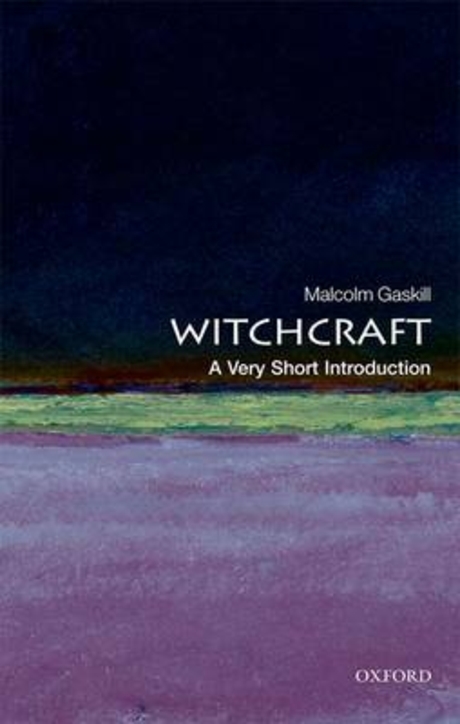
Throughout history, to the present day, witchcraft raises questions about the distinction between reality and fantasy, faith and proof. This book explores witchcraft, both as a contemporary phenomenon and a historical subject. It looks at witch-beliefs and accusations around the world, from pre-history to the present. Malcolm Gaskill is Reader in Early Modern History at the University of East Anglia. Until 2007, he was Fellow and Director of Studies in History at Churchill College, Cambridge, before which he lectured at three other UK universities. An expert in the history of witchcraft, he has written extensively about beliefs, accusations, trials, and confessions, as well as about modern spiritualism. He is the author of three other books: Crime and Mentalities in Early Modern England (2000) - shortlisted for the Longman/History Today Book of the Year award, 2000; Hellish Nell: Last of Britain's Witches (2001); and Witchfinders: a Seventeenth-Century English Tragedy (2005). In 2009 he was a Mayers Fellow at the Henry E. Huntington Library in San Marino, California, and is currently writing a book about English mentalities in seventeenth-century America. He is a Fellow of the Royal Historical Society. Witchcraft is a subject that fascinates us all, and everyone knows what a witch is - or do they? From childhood most of us develop a sense of the mysterious, malign person, usually an old woman. Historically, too, we recognize witch-hunting as a feature of pre-modern societies. But why do witches still feature so heavily in our cultures and consciousness? From Halloween to superstitions, and literary references such as Faust and even Harry Potter, witches still feature heavily inour society. In this Very Short Introduction Malcolm Gaskill challenges all of this, and argues that what we think we know is, in fact, wrong. Taking a historical perspective from the ancient world to contemporary paganism, Gaskill reveals how witchcraft has meant different things to different people and that in every age it has raised questions about the distinction between fantasy and reality, faith and proof. Telling stories, delving into court records, and challenging myths, Gaskill examines the witch-hunts of the sixteenth and seventeenth centuries, and explores the reinvention of witchcraft - as history, religion, fiction, and metaphor. Witchcraft is a subject that fascinates us all. Indeed, from childhood most of us develop some mental image of a witch--usually an old woman, mysterious and malignant. But why do witches still feature so heavily in our cultures and consciousness? From Halloween superstitions to literary references such as Faust and, of course, Harry Potter, witches seem ever-present in our lives. In this Very Short Introduction, Malcolm Gaskill takes a long historical perspective, from the ancient world to contemporary paganism. This is a book about the strangeness of the past, and about contrasts and change; but it's also about affinity and continuity. He reveals that witchcraft is multi-faceted, that it has always meant different things to different people, and that in every age it has raised questions about the distinction between fantasy and reality, faith and proof. Delving into court records, telling anecdotes, and challenging myths, Gaskill re-examines received wisdom, especially concerning the European witch-hunts of the sixteenth and seventeenth centuries. He also explores the modern memory and reinvention of witchcraft--as history, religion, fiction, and metaphor. Witchcraft is a subject that fascinates us all. Indeed, from childhood most of us develop some mental image of a witch--usually an old woman, mysterious and malignant. But why do witches still feature so heavily in our cultures and consciousness? From Halloween superstitions to literary references such as Faust and, of course, Harry Potter, witches seem ever-present in our lives. In thisVery Short Introduction, Malcolm Gaskill takes a long historical perspective, from the ancient world to contemporary paganism. This is a book about the strangeness of the past, and about contrasts and change; but it's also about affinity and continuity. He reveals that witchcraft is multi-faceted, that it has always meant different things to different people, and that in every age it has raised questions about the distinction between fantasy and reality, faith and proof. Delving into court records, telling anecdotes, and challenging myths, Gaskill re-examines received wisdom, especially concerning the European witch-hunts of the sixteenth and seventeenth centuries. He also explores the modern memory and reinvention of witchcraft--as history, religion, fiction, and metaphor. Throughout history, to the present day, witchcraft raises questions about the distinction between reality and fantasy, faith and proof. This Very Short Introduction explores witchcraft, both as a contemporary phenomenon and a historical subject. It looks at witch-beliefs and accusations around the world, from pre-history to the present.