



소개
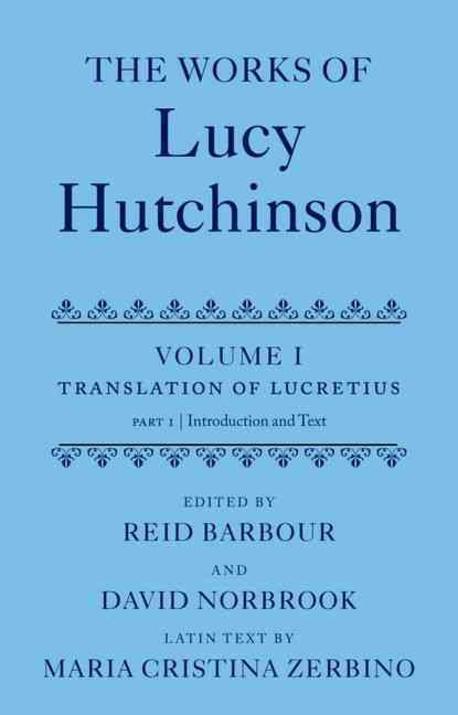
This is the first of a four-volume edition of the writings of Lucy Hutchinson. Hutchinson's translation of Lucretius's classical epic 'De Rerum Natura' is provided alongside the Latin text she used. The detailed commentary and full introduction illuminate the translation and its contexts. Reid Barbour is Professor of English at the University of North Carolina at Chapel Hill. He has published widely in the field of early modern studies, including books on classical reception, religion, prose fiction, and John Selden. He is the editor of Studies in Philology. David Norbrook hastaught at Magdalen College, Oxford and the University of Maryland and is currently Merton Professor of English Literature, University of Oxford. He has published widely on Renaissance literature and history. This is the first volume in the four-volume edition of The Works of Lucy Hutchinson, the first-ever collected edition of the writings of the pioneering author and translator. Hutchinson (1620-81) had a remarkable range of her interests, from Latin poetry to Civil War politics and theology. This edition of her translation of Lucretius's De rerum natura offers new biographical material, demonstrating the changes and unexpected continuities in Hutchinson's lifebetween the work's composition in the 1650s and its dedication in 1675. Hers is the first complete surviving English translation of one of the great classical epics, a challenging text at the borderlines of poetry and philosophy. For the first time, the Lucretius translation is made available alongside the Latin textHutchinson used, which differs in innumerable ways from versions known today. The commentary, the fullest in any edition of a literary translation, providesmultiple ways into further understanding of the translation and its contexts. Written at a momentous period in political and literary history, Hutchinson's Lucretius throws light on the complex transition between 'ancient' and 'modern' conceptions of the classical canon and of natural philosophy. It offers a case study in the history ofreading, and more specifically of reading by a woman. Through close comparison with three contemporary translations, this edition situates Hutchinson's version in the context of the shifting poetic languages of the seventeenth century, and facilitates an approach to Lucretius' often rebarbative Latin. Itfurther demonstrates the remarkable ways in which Hutchinson's engagement with this 'atheistical' poem leaves deep traces on her later, militantly Calvinist prose and verse. Volume I in a four-volume edition of the writings of Lucy Hutchinson, which have never before been published in a collected edition. Hutchinson's translation of Lucretius's classical epic De rerum natura is provided alongside the Latin text she used. The detailed commentary and full introduction illuminate the translation and its contexts.