



소개
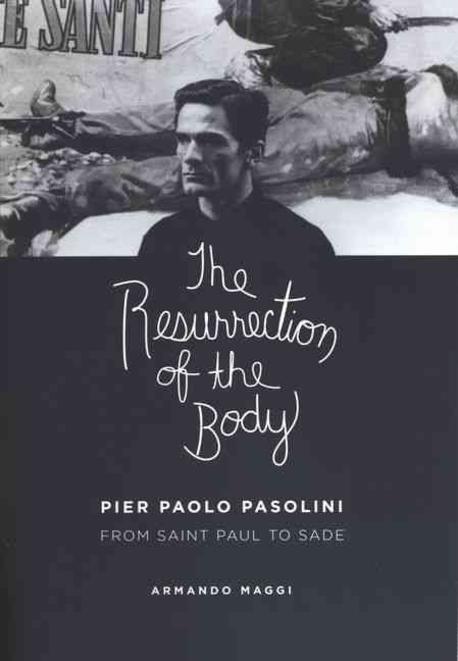
Italian novelist, poet and filmmaker Pier Paolo Pasolini often explored humanity's capacity for violence and cruelty. This is an interpretation of his final works - the screenplay 'Saint Paul', the scenario for 'Porn-Theo-Colossal', the immense and unfinished novel 'Petrolino' and his notorious final film, 'Sal?. Italian novelist, poet, and filmmaker Pier Paolo Pasolini was brutally killed in Rome in 1975, a macabre end to a career that often explored humanity's capacity for violence and cruelty. Along with the mystery of his murderer's identity, Pasolini left behind a controversial but acclaimed oeuvre as well as a final quartet of beguiling projects that signaled a radical change in his aesthetics and view of reality. The Resurrection of the Bodyis an original and compelling interpretation of these final works: the screenplaySaint Paul, the scenario forPorn-Theo-Colossal, the immense and unfinished novelPetrolio, and his notorious final film,Salo or the 120 Days of Sodom, a disturbing adaptation of the writings of the Marquis de Sade. Together these works, Armando Maggi contends, reveal Pasolini's obsession with sodomy and its role within his apocalyptic view of Western society. One of the first studies to explore the ramifications of Pasolini's homosexuality,The Resurrection of the Bodyalso breaks new ground by putting his work into fruitful conversation with an array of other thinkers such as Freud, Strindberg, Swift, Henri Michaux, and Norman O. Brown. "A work of exquisite scholarship that argues for the crucial significance of not only the body, but of the homosexual body, to Pasolini's exhilarating and challenging work." "One of the great merits of this book is its sustained and intellectually valid investigation of the question of homosexuality in Pasolini's writing and cinema. It is an investigation that is long overdue, both in Italy and in North America. Focusing on literary and cinematic work from the period immediately preceding Pasolini's assassination-including texts that have received exceedingly little scholarly attention-Maggi offers a very original understanding of Pasolini's artistic response to the 'apocalypse' of consumer capitalism. Maggi's close analyses of Pasolini's late works-all of which are marked by strong religious preoccupations-benefit not only from the author's expertise in early modern religious thought but also from his excellent knowledge of the history and culture of modern Italy. Refreshingly, Maggi takes many intellectual risks and he often asks his readers to step outside disciplinary comfort zones. In the process, he offers confirmation of Pasolini's central importance in modern European intellectual history."-Patrick Rumble, University of Wisconsin-Madison "One of the great merits of this book is its sustained and intellectually valid investigation of the question of homosexuality in Pasolini's writing and cinema. It is an investigation that is long overdue, both in Italy and in North America. Focusing on literary and cinematic work from the period immediately preceding Pasolini's assassinationincluding texts that have received exceedingly little scholarly attentionMaggi offers a very original understanding of Pasolini's artistic response to the 'apocalypse' of consumer capitalism. Maggi's close analyses of Pasolini's late worksall of which are marked by strong religious preoccupationsbenefit not only from the author's expertise in early modern religious thought but also from his excellent knowledge of the history and culture of modern Italy. Refreshingly, Maggi takes many intellectual risks and he often asks his readers to step outside disciplinary comfort zones. In the process, he offers confirmation of Pasolini's central importance in modern European intellectual history."Patrick Rumble, University of WisconsinMadison "The Resurrection of the Body offers a sophisticated and astute reading of the poetics informing the last phase of Pasolini's career. Maggi makes a determined case for considering the ways in which Sodom came to dominate Pasolini's imagination at a time when he represented the ultimate 'ambassador from this original land of total destruction.' The Resurrection of the Body exposes the transformation in Pasolini's late work of a sexual and mythical topos into an obsession with the apocalypse in modernity and of modernity. The book traces a new genealogy for Pasolini's ultimate, politically radical reflections in which sexuality and the sacred figure prominently at the expense of what might be regarded as the more obviously identifiable sources of the artist's Marxist views. Maggi offers an original reading of the logic of Pasolini's works and, in so doing, delivers a needed contribution to the discussion of the most crucial yet least understood of Pasolini's artistic productions."-Alessia Ricciardi, University of California, Berkeley " The Resurrection of the Bodyoffers a sophisticated and astute reading of the poetics informing the last phase of Pasolini's career. Maggi makes a determined case for considering the ways in which Sodom came to dominate Pasolini's imagination at a time when he represented the ultimate 'ambassador from this original land of total destruction.' The Resurrection of the Bodyexposes the transformation in Pasolini's late work of a sexual and mythical topos into an obsession with the apocalypse in modernity and of modernity. The book traces a new genealogy for Pasolini's ultimate, politically radical reflections in which sexuality and the sacred figure prominently at the expense of what might be regarded as the more obviously identifiable sources of the artist's Marxist views. Maggi offers an original reading of the logic of Pasolini's works and, in so doing, delivers a needed contribution to the discussion of the most crucial yet least understood of Pasolini's artistic productions."Alessia Ricciardi, University of California, Berkeley "This is a book of striking originality-in its approach to Pasolini and in its reconfiguring of his oeuvre in light of Maggi's 'sodomitical' reading of four key late works. It is packed with insights gleaned both from Maggi's detailed and powerfully argued close analyses and from his highly stimulating forays beyond the four core texts."-Robert Gordon, University of Cambridge "This is a book of striking originalityin its approach to Pasolini and in its reconfiguring of his oeuvre in light of Maggi's 'sodomitical' reading of four key late works. It is packed with insights gleaned both from Maggi's detailed and powerfully argued close analyses and from his highly stimulating forays beyond the four core texts."Robert Gordon, University of Cambridge