



소개
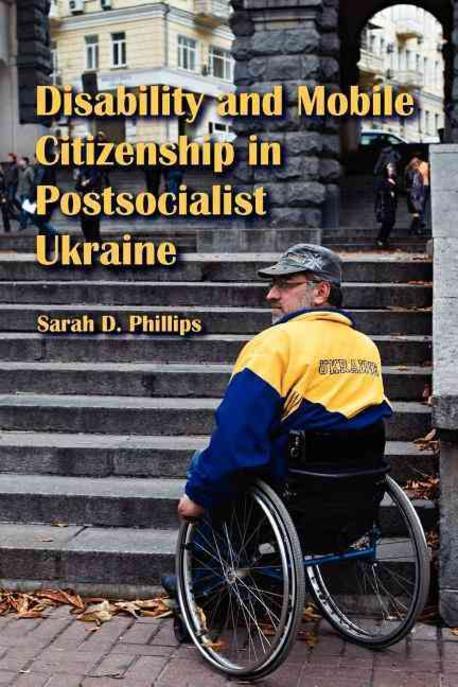
Sarah D. Phillips is Associate Professor of Anthropology at Indiana University Bloomington and author of Women's Social Activism in the Ukraine (IUP, 2008). Sarah Phillips examines how disabled persons in the Ukraine struggled to secure their rights during the tumult of the past two decades. She documents their creative strategies & argues that public storytelling is a powerful means to expand notions of relatedness, kinship & social responsibility. Sarah D. Phillips is Associate Professor of Anthropology at Indiana University Bloomington and author of Women's Social Activism in the New Ukraine (IUP, 2008). Sarah D. Phillips examines the struggles of disabled persons in Ukraine and the other former Soviet states to secure their rights during the tumultuous political, economic, and social reforms of the last two decades. Through participant observation and interviews with disabled Ukrainians across the social spectrum -- rights activists, politicians, students, workers, entrepreneurs, athletes, and others -- Phillips documents the creative strategies used by people on the margins of postsocialist societies to assert claims to "mobile citizenship." She draws on this rich ethnographic material to argue that public storytelling is a powerful means to expand notions of relatedness, kinship, and social responsibility, and which help shape a more tolerant and inclusive society. Sarah D. Phillips examines the struggles of disabled persons in Ukraine and the other former Soviet states to secure their rights during the tumultuous political, economic, and social reforms of the last two decades. Through participant observation and interviews with disabled Ukrainians across the social spectrum-rights activists, politicians, students, workers, entrepreneurs, athletes, and others-Phillips documents the creative strategies used by people on the margins of post-socialist societies to assert claims to "mobile citizenship." She draws on this rich ethnographic material to argue that public storytelling is a powerful means to expand notions of relatedness, kinship, and social responsibility, and which help shape a more tolerant and inclusive society. "A masterfully written ethnography.... [Phillips] breaks new ground in offering us a glimpse as to how fundamental concepts of identity, gender, and belonging can inscribe themselves on the body and yet be shattered in a moment with devastating consequences." -- Catherine Wanner, Pennsylvania State University "Crafted with an interdisciplinary audience in mind, [this] volume will be of interest to historians of disability, Europe, and the Soviet Union, as well as to cultural and medical anthropologists. Written with accessibility in mind, Phillips weaves theoretical concerns into narrative accounts and historical and ethnographic detail." -- H-Disability, May 2011 "[This] entire study is a much-needed and welcome addition to the postsocialist literature and would fit well in anthropology, as well as interdisciplinary, courses on Russian and Eastern European studies." -somatosphere.net "Well written and yet accessible, both descriptive and analytical... a contribution to disability studies, to Soviet and postsocialist ethnography, to the anthropology of disability, and to the study of NGOs and social movements." -- Devva Kasnitz, University of California, Berkeley "Well written and yet accessible, both descriptive and analytical . . . a contribution to disability studies, to Soviet and post-socialist ethnography, to the anthropology of disability, and to the study of NGOs and social movements." Devva Kasnitz, University of California, Berkeley "A masterfully written ethnography. . . . [Phillips] breaks new ground in offering us a glimpse as to how fundamental concepts of identity, gender, and belonging can inscribe themselves on the body and yet be shattered in a moment with devastating consequences." Catherine Wanner, Pennsylvania State University Disabled persons' struggles for rights and recognition