



소개
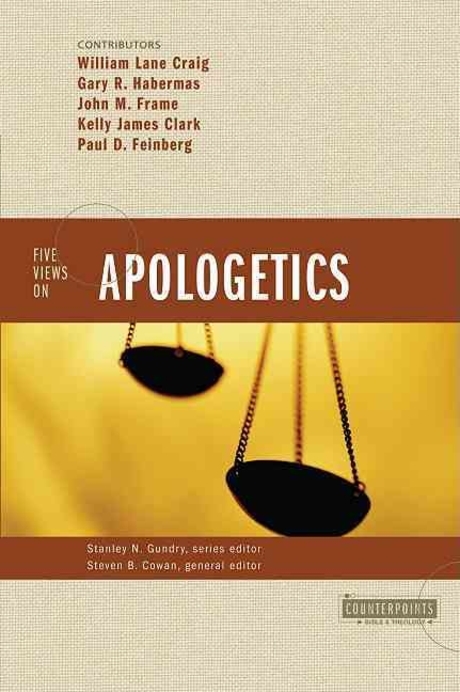
Dr. John Frame serves as J.D. Trimble Chair of Systematic Theology and Philosophy at Reformed Theological Seminary in Oviedo, Florida. Kelly James Clark (PhD, Notre Dame) is associate professor of philosophy at Calvin College in Grand Rapids, Michigan. Paul D. Feinberg, (ThD, Dallas Theological Seminary) was professor of biblical and systematic theology at Trinity Evangelical Divinity School. Steven B. Cowan (M.Div.; Ph.D.) is associate professor of Philosophy and Apologetics at Southeastern Bible College in Birmingham, AL. William Lane Craig (PhD, University of Birmingham, England) is research professor of philosophy at Talbot School of Theology, Biola University and lives in Marietta, GA. IntroductionSteven B. CowanFairly early in my life as a Christian - somewhere in my late teens, I think - I discovered apologetics. This discovery was very timely because I had also discovered that the faith I had in Christ was not shared by everyone. In fact, I discovered that some people outright rejected, even ridiculed, my faith. What''s more, I found out that skeptics had raised arguments against my faith. And being the inquisitive fellow that I am (I hate unanswered questions!), I wondered myself, quite apart from all of these skeptical challenges, what reason or reasons there might be for believing the religious beliefs that I embraced. Thus, Paul Little''s little book, Know Why You Believe, and Josh McDowell''s Evidence That Demands a Verdict came at an appropriate time in my life, introducing me to apologetics. And from Little and McDowell, I jumped right into Sproul, Gerstner, and Lindsley''s Classical Apologetics - the book that sparked an insatiable thirst in me for apologetics, philosophy, and theology.No sooner had I discovered apologetics, however, than I also uncovered the fact that not every apologist did apologetics the same way. It was Sproul, Gerstner, and Lindsley''s fault, if the truth be known. They distinguished between something they called "classical apologetics" and this bogeyman called "pre-suppositionalism." And I soon discovered that there were other varieties of apologetic methods as well, and that the disagreements between them could sometimes be sharp. As a young college student, I had a hard time trying to figure out who was right and who was wrong in this debate. I distinctly remember (this was in the early 1980s) wishing that someone would publish one of those "multiple views" books on apologetic methodology so that I could see all the different views side by side and have an easier time making up my own mind. I waited and waited for well over a decade, and no such book appeared. Then I decided to do it myself! And Zondervan has been gracious enough to assist me.The Nature of ApologeticsThis is a book about apologetic methodology, not a book of apologetics per se. That is, it is not a book that seeks to do apologetics as much as a book that discusses how one ought to do apologetics. But for the sake of some of our readers, it may help at this point to spell out what apologetics is. Apologetics is concerned with the defense of the Christian faith against charges of falsehood, inconsistency, or credulity. Indeed, the very word apologetics is derived from the Greek apologia, which means "defense." It was a term used in the courts of law in the ancient world. Socrates, for example, gave his famous "apology," or defense, before the court of Athens. And the apostle Paul defended himself (apologeomai) before the Roman officials (Acts 24:10; 25:8). As it concerns the Christian faith, then, apologetics has to do with defending, or making a case for, the truth of the Christian faith. It is an intellectual discipline that is usually said to serve at least two purposes: (1) to bolster the faith of Christian believers, and (2) to aid in the task of evangelism. Apologists seek to accomplish these goals in two distinct ways. One is by refuting objections to the Christian faith, such as the problem of evil or the charge that key Christian doctrines (e.g., the Trinity, incarnation, etc.) are incoherent. This apologetic task can be called negative or defensive apologetics. The second, perhaps complementary, way apologists fulfill their purposes is by offering positive reasons for Christian faith. The latter, called positive or offensive apologetics, often takes the form of arguments for God''s existence or for the resurrection and deity of Christ but are by no means limited to these. Of course, some apologists, as we will see, contend that such arguments are unnecessary or perhaps even detrimental to Christian faith. These apologists focus primarily on the negative task and downplay the role of positive apologetics The goal of apologetics is to persuasively answer honest objections that keep people from faith in Jesus Christ. But of several apologetic approaches, which is most effective? Five Views on Apologetics examines the "how-to" of apologetics, putting five prominent views under the microscope: Classical, Evidential, Presuppositional, Reformed Epistemology, and Cumulative Case. Offering a forum for presentation, critique, and defense, this book allows the contributors for the different viewpoints to interact. Like no other book, Five Views on Apologetics lets you compare and contrast different ways of "doing" apologetics. Your own informed conclusions can then guide you as you meet the questions of a needy world with the claims of the gospel. The Counterpoints series provides a forum for comparison and critique of different views on issues important to Christians. Counterpoints books address two categories: Church Life and Exploring Theology. Complete your library with other books in the Counterpoints series. A multiple-view book on apologetic methods, this material deals with a very relevant topic in the midst of a changing culture. Its primary contributors are: William Lane Craig, Gary R. Habermas, Paul D. Feinberg, John M. Frame, and Kelly James Clark. Contents Introduction: Steven B. Cowan Glossary of Key Terms and Concepts 1. Classical Apologetics William Lane Craig Responses Gary R. Habermas Paul D. Feinberg John M. Frame Kelly James Clark 2. Evidential Apologetics Gary R. Habermas Responses William Lane Craig Paul D. Feinberg John M. Frame Kelly James Clark 3. Cumulative Case Apologetics Paul D. Feinberg Responses William Lane Craig Gary R. Habermas John M. Frame Kelly James Clark 4. Presuppositional Apologetics John M. Frame Responses William Lane Craig Gary R. Habermas Paul D. Feinberg Kelly James Clark 5. Reformed Epistemology Apologetics Kelly James Clark Responses William Lane Craig Gary R. Habermas Paul D. Feinberg John M. Frame 6. Closing Remarks William Lane Craig Gary R. Habermas Paul D. Feinberg John M. Frame Kelly James Clark Conclusion: Steven B. Cowan About the Contributors Scripture Index Person Index Subject Index