소개
Jeremy Sarkin is Visiting Professor of Human Rights at the Fletcher School at Tufts University, Senior Professor of Law at the University of the Western Cape in Cape Town, Legal Advisor to the Paramount Chief of the Herero people in Namibia, and Special Rapporteur for Enforced and Involuntary Disappearances to the United Nations Human Rights Council
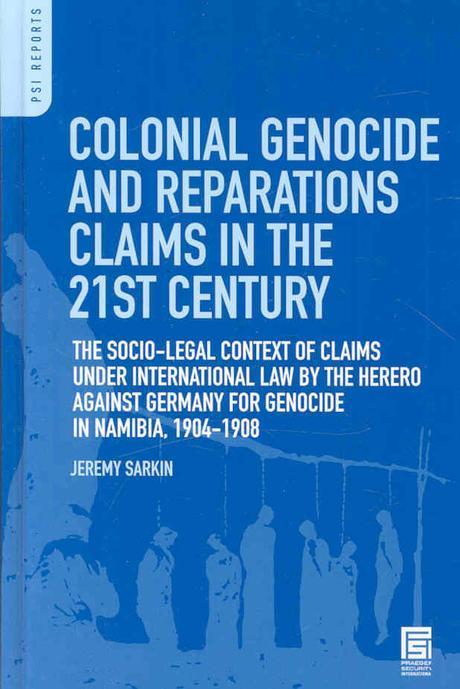
The Herero genocide, conducted in German South-West Africa (present-day Namibia) between 1904 and 1908, is recognised by the UN as the first organised state genocide in world history. This text explores the enduring impact in Namibia of the Germany's colonial campaign for genocide.
Jeremy Sarkin is Visiting Professor of Human Rights at the Fletcher School at Tufts University and Senior Professor of Law at the University of the Western Cape in Cape Town, South Africa. He is Special Rapporteur for Enforced and Involuntary Disappearances to the United Nations Human Rights Council. He served as an acting judge in the Cape High Court in South Africa. He is Legal Advisor to the Paramount Chief of the Herero people in Nambia. He has published over 100 articles and 12 books, including Human Rights in African Prisons (2008), Reconciliation in Divided Societies: Finding Common Ground (2007), Carrots and Sticks: The Truth and Reconciliation Commission and the South African Amnesty Process (2004), and Human Rights, The Citizen, and the State: South African and Irish Perspectives (2002).
More and more, the descendants of indigenous victims of genocide, land expropriation, forced labor, and other systematic human rights violations committed by colonial powers are seeking reparations under international law from the modern successor governments and corporations. As the number of colonial reparations cases increases, courts around the world are being asked to apply international law to determine whether reparations are due for atrocities and crimes that might have been committed long ago but whose lasting effects are alleged to injure the modern descendants of the victims. Sarkin analyzes the thorny issues of international law issues raised in such suits by focusing on groundbreaking cases in which he is involved as legal advisor to the paramount chief of the Herero people of Namibia. In 2001, the Herero became the first ethnic group to seek reparations under the legal definition of genocide by bringing multi-billion-dollar suits against Germany and German companies in a number of US federal courts under the Alien Torts Claim Act of 1789. The Herero genocide, conducted in German South-West Africa (present-day Namibia) between 1904 and 1908, is recognized by the UN as the first organized state genocide in world history. Although the Herero were subjected to "Germany's First Genocide," they have, unlike the victims of the Holocaust, received no reparations from Germany. By machine-gun massacres, starvation, poisoning, and forced labor in Germany's first concentration camps, the German Schutztruppe systematically exterminated as many as 105,000 Herero women, and children, composing most of the Herero population. Sarkin considers whether these historical events constitute legally defined genocide, crimes against humanity, and other international crimes. He evaluates the legal status of indigenous polities in Africa at the time and he explores the enduring impact in Namibia of the Germany's colonial campaign of genocide. He extrapolates the Herero case to global issues of reparations, apologies, and historical human rights violations, especially in Africa.
More and more, the descendants of indigenous victims of genocide, land expropriation, forced labor, and other systematic human rights violations committed by colonial powers are seeking reparations under international law from the modern successor governments and corporations. As the number of colonial reparations cases increases, courts around the world are being asked to apply international law to determine whether reparations are due for atrocities and crimes that might have been committed long ago but whose lasting effects are alleged to injure the modern descendants of the victims. Sarkin analyzes the thorny issues of international law raised in such suits by focusing on groundbreaking cases in which he is involved as legal advisor to the paramount chief of the Herero people of Namibia. In 2001, the Herero became the first ethnic group to seek reparations under the legal definition of genocide by bringing multi-billion-dollar suits against Germany and German companies in a number of U.S. federal courts under the Alien Torts Claim Act of 1789. The Herero genocide, conducted in German South-West Africa (present-day Namibia) between 1904 and 1908, is recognized by the UN as the first organized state genocide in world history. Although the Herero were subjected to "Germany's First Genocide," they have, unlike the victims of the Holocaust, received no reparations from Germany. By machine-gun massacres, starvation, poisoning, and forced labor in Germany's first concentration camps, the German Schutztruppe systematically exterminated as many as 105,000 Herero women, and children, composing most of the Herero population. Sarkin considers whether these historical events constitute legally defined genocide, crimes against humanity, and other international crimes. He evaluates the legal status of indigenous polities in Africa at the time and he explores the enduring impact in Namibia of the Germany's colonial campaign of genocide. He extrapolates the Herero case to global issues of reparations, apologies, and historical human rights violations, especially in Africa.
More and more, the descendants of indigenous victims of genocide, land expropriation, forced labor, and other systematic human rights violations committed by colonial powers are seeking reparations under international law from the modern successor governments and corporations. As the number of colonial reparations cases increases, courts around the world are being asked to apply international law to determine whether reparations are due for atrocities and crimes that might have been committed long ago but whose lasting effects are alleged to injure the modern descendants of the victims. Sarkin analyzes the thorny issues of international law raised in such suits by focusing on groundbreaking cases in which he is involved as legal advisor to the paramount chief of the Herero people of Namibia. In 2001, the Herero became the first ethnic group to seek reparations under the legal definition of genocide by bringing multi-billion-dollar suits against Germany and German companies in a number of U.S. federal courts under the Alien Torts Claim Act of 1789. The Herero genocide, conducted in German South-West Africa (present-day Namibia) between 1904 and 1908, is recognized by the UN as the first organized state genocide in world history. Although the Herero were subjected to Germany's First Genocide, they have, unlike the victims of the Holocaust, received no reparations from Germany. By machine-gun massacres, starvation, poisoning, and forced labor in Germany's first concentration camps, the German Schutztruppe systematically exterminated as many as 105,000 Herero women, and children, composing most of the Herero population. Sarkin considers whether these historical events constitute legally defined genocide, crimes against humanity, and other international crimes. He evaluates the legal status of indigenous polities in Africa at the time and he explores the enduring impact in Namibia of the Germany's colonial campaign of genocide. He extrapolates the Herero case to global issues of reparations, apologies, and historical human rights violations, especially in Africa.
More and more, the descendants of indigenous victims of genocide, land expropriation, forced labor, and other systematic human rights violations committed by colonial powers are seeking reparations under international law from the modern successor governments and corporations. As the number of colonial reparations cases increases, courts around the world are being asked to apply international law to determine whether reparations are due for atrocities and crimes that might have been committed long ago but whose lasting effects are alleged to injure the modern descendants of the victims. Sarkin analyzes the thorny issues of international law raised in such suits by focusing on groundbreaking cases in which he is involved as legal advisor to the paramount chief of the Herero people of Namibia. In 2001, the Herero became the first ethnic group to seek reparations under the legal definition of genocide by bringing multi-billion-dollar suits against Germany and German companies in a number of US federal courts under the Alien Torts Claim Act of 1789. The Herero genocide, conducted in German South-West Africa (present-day Namibia) between 1904 and 1908, is recognized by the UN as the first organized state genocide in world history. Although the Herero were subjected to "Germany's First Genocide," they have, unlike the victims of the Holocaust, received no reparations from Germany. By machine-gun massacres, starvation, poisoning, and forced labor in Germany's first concentration camps, the German Schutztruppe systematically exterminated as many as 105,000 Herero women, and children, composing most of the Herero population. Sarkin considers whether these historical events constitute legally defined genocide, crimes against humanity, and other international crimes. He evaluates the legal status of indigenous polities in Africa at the time and he explores the enduring impact in Namibia of the Germany's colonial campaign of genocide. He extrapolates the Herero case to global issues of reparations, apologies, and historical human rights violations, especially in Africa.
More and more, the descendants of indigenous victims of genocide, land expropriation, forced labor, and other systematic human rights violations committed by colonial powers are seeking reparations under international law from the modern successor governments and corporations. As the number of colonial reparations cases increases, courts around the world are being asked to apply international law to determine whether reparations are due for atrocities and crimes that might have been committed long ago but whose lasting effects are alleged to injure the modern descendants of the victims. Sarkin analyzes the thorny issues of international law issues raised in such suits by focusing on groundbreaking cases in which he is involved as legal advisor to the paramount chief of the Herero people of Namibia. In 2001, the Herero became the first ethnic group to seek reparations under the legal definition of genocide by bringing multi-billion-dollar suits against Germany and German companies in a number of US federal courts under the Alien Torts Claim Act of 1789.
Sarkin analyzes the thorny issues of international law raised in such suits by focusing on groundbreaking cases in which he is involved as legal advisor to the paramount chief of the Herero people of Namibia.
The reparations claims filed in US courts by the Herero of Namibia for genocide committed by Germany in 1904-1908 raise critical international law issues bearing on the potential claims of many indigenous peoples against former colonial powers.
" Colonial Genocide is a welcome and timely contribution to the literature on the Herero experience under German Colonial and more generally to the discourse on redress and reparations for historical crimes. As the author rightly notes, the plethora of research on the genocides of Europe over the last century would indicate that European genocide is thought more worthy of study than genocide in other, less developed, regions of the world. In this book, Sarkin broadens the debate, effectively locating the Herero atrocities within the broader context of the developing norms on genocide and reparations." - giazilo.blogspot.com
"Sarkin argues for rights of reparations to the Herero people and draws from these atrocities general conclusions about developing norms of reparations for indigenous peoples. This is an important book for readers interested in understanding the expanding global norms of reparation for historical crimes, particularly in the postcolonial context."- Elazar Barkan, Professor of International and Public Affairs at Columbia University, Founding Director of the Institute for Historical Justice and Reconciliation at the Salzburg Seminar
"The 1904-08 massacre of the Herero in South West Africa is often cited as the first genocide of the twentieth century. Jeremy Sarkin explores the historical and legal dimensions of the terrible massacres, in this highly readable and superbly researched study. He examines this attempted extermination of an entire people in light of evolving human rights law, especially with regard to such important issues as historical memory, the right to truth, and the protection of indigenous peoples."- William Schabas, Professor of Human Rights Law, National University of Ireland, Galway
"This book covers a novel terrain-the legal questions involved in reparations for human rights violations that occurred in the nineteenth and early in the twentieth centuries. What is the relevance and applicability of international law with regard to events that occurred so many decades ago? It is essential reading for anyone interested in the origins and applicability of international human rights law and the socio-legal issues surrounding historical reparations, and particularly in Africa."- Richard J. Goldstone, Former Justice of the Constitutional Court of South Africa, Former Chief Prosecutor of the UN International Criminal Tribunals for the former Yugoslavia and Rwanda
"Those who thought that colonial genocide had been erased from the memories of succeeding generations are mistaken. Sarkin's important book on the Herero genocide claims needs to be read both as a model for similar claims by other indigenous peoples and as a discourse on humanization."- M. Cherif Bassiouni, Professor of Law, DePaul University College of Law, President of the International Institute of Higher Studies in Criminal Sciences in Syracuse, Italy
Introduction 1. THE LEGACY OF THE HERERO GENOCIDE ON NAMIBIA TODAY 2. THE HISTORICAL AND CURRENT LEGAL IMPLICATIONS OF GERMANYS CONDUCT 3. THE DEVELOPING NORM OF REPARATIONS AND APOLOGIES FOR HISTORICAL CLAIMS: PAST, PRESENT AND FUTURE CONCLUSION
"Those who thought that colonial genocide had been erased from the memories of succeeding generations are mistaken. Sarkin's important book on the Herero genocide claims needs to be read both as a model for similar claims by other indigenous peoples and as a discourse on humanization." - M. Cherif Bassiouni, Professor of Law, DePaul University College of Law, President of the International Institute of Higher Studies in Criminal Sciences in Syracuse, Italy
Sarkin argues for rights of reparations to the Herero people and draws from these atrocities general conclusions about developing norms of reparations for indigenous peoples. This is an important book for readers interested in understanding the expanding global norms of reparation for historical crimes, particularly in the postcolonial context.
The 1904-08 massacre of the Herero in South West Africa is often cited as the first genocide of the twentieth century. Jeremy Sarkin explores the historical and legal dimensions of the terrible massacres, in this highly readable and superbly researched study. He examines this attempted extermination of an entire people in light of evolving human rights law, especially with regard to such important issues as historical memory, the right to truth, and the protection of indigenous peoples.
This book covers a novel terrain-the legal questions involved in reparations for human rights violations that occurred in the nineteenth and early in the twentieth centuries. What is the relevance and applicability of international law with regard to events that occurred so many decades ago? It is essential reading for anyone interested in the origins and applicability of international human rights law and the socio-legal issues surrounding historical reparations, and particularly in Africa.
Those who thought that colonial genocide had been erased from the memories of succeeding generations are mistaken. Sarkin's important book on the Herero genocide claims needs to be read both as a model for similar claims by other indigenous peoples and as a discourse on humanization.