



소개
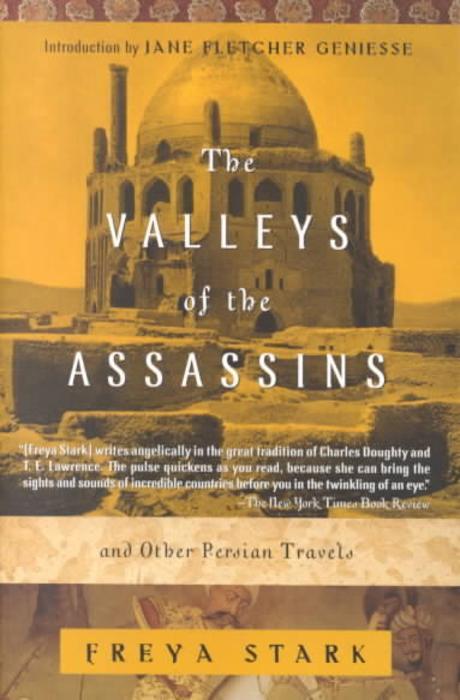
Freya Stark, described byThe Times of Londonas "the last of the Romantic Travellers" upon her death in 1993, published during her lifetime more than thirty books about her travels in the Middle East, includingThe Southern Gates of Arabia. Jane Fletcher Geniesse is a former reporter forThe New York Timesand the author of the biographyPassionate Nomad: The Life of Freya Stark, a finalist for the 1999 PEN/Martha Albrand Award for First Nonfiction. Her writing has been featured inThe Washington Post, New York magazine,andTown & Country. She lives in Washington, D.C. CHAPTER I A Fortnight in N.W. Luristan In the wastes of civilization, Luristan is still an enchanted name. Its streams are dotted blue lines on the map and the position of its hills a matter of taste. It is still a country for the explorer. He finds out what he cannot do And then he goes and does it. I did not do it, for I penetrated only a very little way. But I spent a fortnight in that part of the country where one is less frequently murdered, and I saw the Lurs in their own medieval garbthe white tight-waisted coat with sleeves hanging in points from the elbow and white felt caps over the curls that hide their ears. As the aim of the Persian government is to have them all dressed a la Ferangi in a year's time, with peaked kepis and the Shah's portrait stamped on the lining, it is worthwhile perhaps to give a picture of them as far as possible before too much tidiness spoils them. Behold then Hajji and me, climbing on very scraggy ponies up to the Varazan Pass. Behind us is the town of Nihavend and the nearer mound of Gian where French archaologists give kind hospitality and press Bovril and ham into one's saddle-bagsthe latter not to be touched, alas! because of religion, which is always interfering with the pleasant conduct of life. Hajji looks gloomy. Friends have told him he is going to be killed. Lessening under our feet, the grassy slopes of Kuh Garu shut in Luristan as with a wall. This climbing into a country which is not considered safe is exhilarating, though no sense of peril is possible in so bright sunlight, such radiant solitude, such breadth of mountain ranges under the pale October sky. As a matter of fact, it is only the other three passes over Kuh Garu which are presumed to be held by robbers at this moment: our Varazan has been in the hands of government for the last six weeks. It is as well to know this beforehand; otherwise one might take the garrison for bandits instead of policemen. They come tumbling out of a round stone tower, their guns polished and clean among the debris of the rest of their attire. They take a toll of eight krans (1s. 5d.) for every pack animal across the pass. When the robbers held it, they took only sevenpence more, and might have gone on making a regular income for a long time if they had not lost their tempers one day with two merchants who thought to bargain fivepence off the tariff and whose death caused a stoppage in the charcoal trade which comes out of Luristan by Kuh Garu; whereupon government dislodged the bandits, handed over ten guns to some Lurs of Khava who are on the side of law and order for the time being, and left the pass and its revenue in their hands. These volunteers were friendly people, delighted with conversation and chivalrous enough to forgo their eight krans in honour of their first Ferangi from the plain. They brought little glasses of tea into the sunshine, spread a felt rug, and began to talk about the present security of Persia with the enthusiasm which is general there among the poorer sort. One of them had a wounded leg which I doctored with brandy, while the chief of the post, pushing his long hair out of his eyes and leaning on his gun, slowly read the address on my letter of introduction to the Governor at Alishtar. This letter was an "Open Sesame": its quite insignificant contents were luckily sealed up, but the name on the envelope had already served to get me through the entanglements of the Nihavend police: its mere production gave the impression that I travelled with the authority of governments behind me and when I handed it to anyone, I tried to cultivate a manner to correspond. I had another letter to the brother of the Keeper of the Varazan, which produced more friendliness and promise of a night's lodging in the plain of Khava below. The Ten sat in a row Hailed as a classic upon its first publication in 1934,The Valleys of the Assassinsfirmly established Freya Stark as one of her generation's most intrepid explorers. The book chronicles her travels into Luristan, the mountainous terrain nestled between Iraq and present-day Iran, often with only a single guide and on a shoestring budget. Stark writes engagingly of the nomadic peoples who inhabit the region's valleys and brings to life the stories of the ancient kingdoms of the Middle East, including that of the Lords of Alamut, a band of hashish-eating terrorists whose stronghold in the Elburz Mountains Stark was the first to document for the Royal Geographical Society. Her account is at once a highly readable travel narrative and a richly drawn, sympathetic portrait of a people told from their own compelling point of view. This edition includes a new Introduction by Jane Fletcher Geniesse, Stark's biographer. Hailed as a classic upon its first publication in 1934, The Valleys of the Assassinsfirmly established Freya Stark as one of her generation's most intrepid explorers. The book chronicles her travels into Luristan, the mountainous terrain nestled between Iraq and present-day Iran, often with only a single guide and on a shoestring budget. Stark writes engagingly of the nomadic peoples who inhabit the region's valleys and brings to life the stories of the ancient kingdoms of the Middle East, including that of the Lords of Alamut, a band of hashish-eating terrorists whose stronghold in the Elburz Mountains Stark was the first to document for the Royal Geographical Society. Her account is at once a highly readable travel narrative and a richly drawn, sympathetic portrait of a people told from their own compelling point of view. This edition includes a new Introduction by Jane Fletcher Geniesse, Stark's biographer. Since 1917 The Modern Library prides itself as "The modern Library of the world's Best Books".Its paperback series feature treasured classics, major translations of great works, and rediscoveries of keen literary and historical merit. Featuring introduct [Freya Stark] writes angelically in the great tradition of Charles Doughty and T. E. Lawrence. The pulse quickens as you read, because she can bring the sights and sounds of incredible countries before you in the twinkling of an eye." --The New York Times Book Review "[The Valleys of the Assassins] remains a wonderful description of a people and a place, altered today by Progress, perhaps, but through [Freya Stark's] eyes still alive with bandits, dervishes, idol worshippers, armed tribesmen, and mountain scenery of great beauty." --From the Introduction by Jane Fletcher Geniesse "Stark is constantly alive to her immediate surroundings: indeed, what gives her work its extraordinary depth and power is just this ability to focus past and present... stereoscopically, in a single image." --Times Literary Supplement[London] [Freya Stark] writes angelically in the great tradition of Charles Doughty and T. E. Lawrence. The pulse quickens as you read, because she can bring the sights and sounds of incredible countries before you in the twinkling of an eye." -- The New York Times Book Review "[ The Valleys of the Assassins] remains a wonderful description of a people and a place, altered today by Progress, perhaps, but through [Freya Stark's] eyes still alive with bandits, dervishes, idol worshippers, armed tribesmen, and mountain scenery of great beauty." --From the Introduction by Jane Fletcher Geniesse "Stark is constantly alive to her immediate surroundings: indeed, what gives her work its extraordinary depth and power is just this ability to focus past and present... stereoscopically, in a single image." -- Times Literary Supplement [London]