



소개
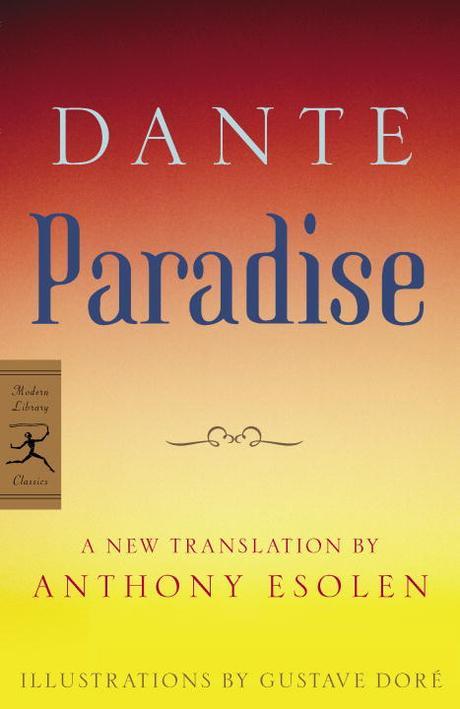
Anthony Esolen is a professor of English at Providence College. He is the author of Peppers, a book of poetry, and his translations include Lucretius's De rerum natura and Torquato Tasso's Gerusalemme liberata, along with Dante's Inferno and Purgatory, published by the Modern Library. Dante Alighieri was born in Florence in 1256. He entered public life in 1295, later becoming one of the six governing magistrates of Florence. He repeatedly opposed the machinations of Pope Boniface VIII, who was attempting to place all of Tuscany under Papal rule, and in 1301 was banished from Florence. Dante would never again enter his native city, spending his remaining years with a series of patrons in various Italian courts. He completed The Divine Comedy shortly before his death in 1321. Gustave Dore (1832-83) was one of the most popular and prolific French illustrators of the mid 19th century. Canto One Dante and Beatrice are at the threshold of Heaven. She explains to him that it is the nature of the human soul to rise. The glory of the One who moves all things penetrates the universe with light, more radiant in one part and elsewhere less: I have been in that heaven He makes most bright,4 and seen things neither mind can hold nor tongue utter, when one descends from such great height, For as we near the One for whom we long,7 our intellects so plunge into the deep, memory cannot follow where we go. Nevertheless what small part I can keep10 of that holy kingdom treasured in my heart will now become the matter of my song. O good Apollo, for this last work of art,13 make me as fit a vessel of your power as you demand when you bestow the crown Of the beloved laurel. Till this hour16 one peak of twin Parnassus has sufficed, but if I am to enter the lists now I shall need both. Then surge into my breast19 and breathe your song, as when you drew the vain Marsyas from the sheath of his own limbs. Father, virtue divine, should you but deign22 that I make manifest a shadow of the blessed kingdom sealed upon my brain, At the foot of that tree whose wood you love25 you'll see me stand and crown my brows with green, made worthy by the subject, and by you. Poets and Caesars now so rarely glean28 those leaves to celebrate a victory (man's fault and shame, for our desires are mean), the Peneian branches must give birth to joy31 when any man should thirst for their high fame, in the glad heart of the Delphic deity. A little spark gives birth to a great flame.34 Better voices perhaps will follow mine, praying to hear what Cyrrha shall proclaim! By various spills of light the sun will shine37 dawning upon the world of men that die, but at the three-cross intersection of Four rings it rises in the company40 of a more favorable time of year, happier stars, to stamp this worldly clay With its most perfect seal. One hemisphere43 lay brightening in that stream and one grew dim, as it made morning there and evening here, When I saw Beatrice turn upon her left46 and look to Heaven to gaze into the sun: no eagle ever held a gaze so firm. As a reflecting ray will follow upon49 the first and in a glance, an instant, rise just like a pilgrim longing to turn home, So she instilled her gazingthrough my eyes52 into my powers of fancy, and I too stared at the sun more than our sight can bear. With our weak powers on earth one may not do55 what there one maythanks to the special place created as the proper home for man. Not long could I sustain the brilliant rays58 before they seemed to flash like sparks that play round steel still white-hot from the forge's blaze, And suddenly it seemed that day and day61 were fused, as if the One who wields the might adorned the heavens with a second sun. Into the everlasting wheels of light64 Beatrice gazed with silent constancy; on her I gazed, far from that central sight. Her countenance had the same effect in me67 as did the plant that Glaucus tasted when it made him share the godhood of the sea. To signify man's soaring beyond man70 words will not do: let my comparison suffice for them for whom the grace of God Reserves the experience. If I bore alone73 that part of me "If there is any justice in the world of books, [Esolen's] will be the standard Dante . . . for some time to come."-Robert Royal,Crisis In this, the concluding volume ofThe Divine Comedy, Dante ascends from the devastation of the Inferno and the trials of Purgatory. Led by his beloved Beatrice, he enters Paradise, to profess his faith, hope, and love before the Heavenly court. Completed shortly before his death,Paradiseis the volume that perhaps best expresses Dante's spiritual philosophy about resurrection, redemption, and the nature of divinity. It also affords modern-day readers a clear window into late medieval perceptions about faith. A bilingual text, classic illustrations by Gustave Dor? an appendix that reproduces Dante's key sources, and other features make this the definitive edition of Dante's ultimate masterwork. "If there is any justice in the world of books, [Esolen's] will be the standard Dante . . . for some time to come."Robert Royal,Crisis In this, the concluding volume ofThe Divine Comedy, Dante ascends from the devastation of the Inferno and the trials of Purgatory. Led by his beloved Beatrice, he enters Paradise, to profess his faith, hope, and love before the Heavenly court. Completed shortly before his death,Paradiseis the volume that perhaps best expresses Dante's spiritual philosophy about resurrection, redemption, and the nature of divinity. It also affords modern-day readers a clear window into late medieval perceptions about faith. A bilingual text, classic illustrations by Gustave Dore, an appendix that reproduces Dante's key sources, and other features make this the definitive edition of Dante's ultimate masterwork. "If there is any justice in the world of books, [Esolen's] will be the standard Dante . . . for some time to come."Robert Royal, Crisis In this, the concluding volume of The Divine Comedy, Dante ascends from the devastation of the Inferno and the trials of Purgatory. Led by his beloved Beatrice, he enters Paradise, to profess his faith, hope, and love before the Heavenly court. Completed shortly before his death, Paradiseis the volume that perhaps best expresses Dante's spiritual philosophy about resurrection, redemption, and the nature of divinity. It also affords modern-day readers a clear window into late medieval perceptions about faith. A bilingual text, classic illustrations by Gustave Dore, an appendix that reproduces Dante's key sources, and other features make this the definitive edition of Dante's ultimate masterwork. "If there is any justice in the world of books, [Esolen's] will be the standard Dante . . . for some time to come."Robert Royal,Crisis In this, the concluding volume ofThe Divine Comedy, Dante ascends from the devastation of the Inferno and the trials of Purgatory. Led by his beloved Beatrice, he enters Paradise, to profess his faith, hope, and love before the Heavenly court. Completed shortly before his death,Paradiseis the volume that perhaps best expresses Dante's spiritual philosophy about resurrection, redemption, and the nature of divinity. It also affords modern-day readers a clear window into late medieval perceptions about faith. A bilingual text, classic illustrations by Gustave Dore, an appendix that reproduces Dante's key sources, and other features make this the definitive edition of Dante's ultimate masterwork. Since 1917 The Modern Library prides itself as "The modern Library of the world's Best Books". Its paperback series feature treasured classics, major translations of great works, and rediscoveries of keen literary and historical merit.Featuring introduc