



소개
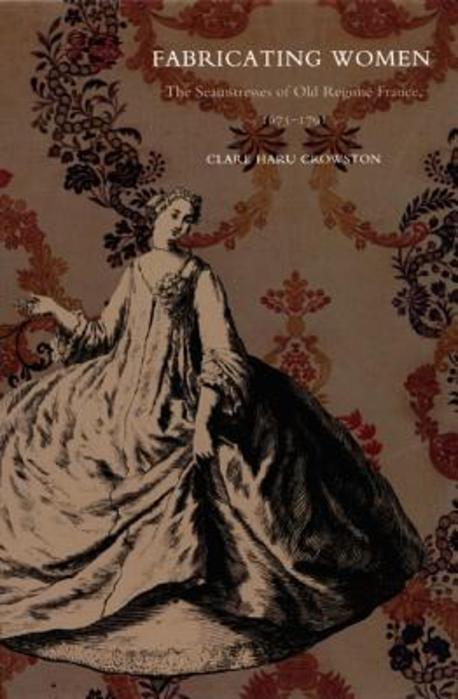
Clare Haru Crowston is Assistant Professor of History at the University of Illinois at Urbana-Champaign. "A welcome contribution to the literature on women's work in preindustrial Europe. This is so well placed in the economic and social history of the period that it will become a classic among the books that define the age."-Daryl M. Hafter, author ofEuropean Women and Preindustrial Craft "Fabricating Womenoffers a richly textured and much-needed look at the experience of working women that will enhance our understanding of the old regime in a variety of ways. This well-grounded portrait of one area of history simultaneously throws light on far broader issues, such as the role of the state, the working of the economy, and the legal status and economic opportunities of women."-Gail Bossenga, author ofThe Politics of Privilege: Old Regime and Revolution in Lille Clare Haru Crowston is Assistant Professor of History at the University of Illinois at Urbana-Champaign. "A welcome contribution to the literature on women's work in preindustrial Europe. This is so well placed in the economic and social history of the period that it will become a classic among the books that define the age."--Daryl M. Hafter, author of "European Women and Preindustrial Craft" Fabricating Womenexamines the social institution of the seamstresses' guild in France from the time of Louis XIV to the Revolution. In contrast with previous scholarship on women and gender in the early modern period, Clare Haru Crowston asserts that the rise of the absolute state, with its centralising and unifying tendencies, could actually increase women's economic, social, and legal opportunities and allow them to thrive in corporate organisations such as the guild. Yet Crowston also reveals paradoxical consequences of the guild's success, such as how its growing membership and visibility ultimately fostered an essentialised femininity that was tied to fashion and appearances.Situating the seamstresses' guild as both an economic and political institution, Crowston explores in particular its relationship with the all-male tailors' guild, which had dominated the clothing fabrication trade in France until women challenged this monopoly during the seventeenth century. Combining archival evidence with visual images, technical literature, philosophical treatises, and fashion journals, she also investigates the techniques the seamstresses used to make and sell clothing, how the garments reflected and shaped modern conceptions of femininity, and guild officials' interactions with royal and municipal authorities. Finally, by offering a revealing portrait of these women's private lives - explaining, for instance, how many seamstresses went beyond traditional female boundaries by choosing to remain single and establish their own households - Crowston challenges existing ideas about women's work and family in early modern Europe.Although clothing lay at the heart of French economic production, social distinction, and cultural identity, Fabricating Womenis the first book to investigate this immense and archetypal female guild in depth. It will be welcomed by students and scholars of French and European history, women's and labour history, fashion and technology, and early modern political economy. ""Fabricating Women" offers a richly textured and much-needed look at the experience of working women that will enhance our understanding of the old regime in a variety of ways. This well-grounded portrait of one area of history simultaneously throws light on far broader issues, such as the role of the state, the working of the economy, and the legal status and economic opportunities of women."--Gail Bossenga, author of "The Politics of Privilege: Old Regime and Revolution in Lille" Winner of the 2002 Berkshire Prize, presented by the Berkshire Conference of Women Historians Fabricating Womenexamines the social institution of the seamstresses' guild in France from the time of Louis XIV to the Revolution. In contrast with previous scholarship on women and gender in the early modern period, Clare Haru Crowston asserts that the rise of the absolute state, with its centralizing and unifying tendencies, could actually increase women's economic, social, and legal opportunities and allow them to thrive in corporate organizations such as the guild. Yet Crowston also reveals paradoxical consequences of the guild's success, such as how its growing membership and visibility ultimately fostered an essentialized femininity that was tied to fashion and appearances. Situating the seamstresses' guild as both an economic and political institution, Crowston explores in particular its relationship with the all-male tailors' guild, which had dominated the clothing fabrication trade in France until women challenged this monopoly during the seventeenth century. Combining archival evidence with visual images, technical literature, philosophical treatises, and fashion journals, she also investigates the techniques the seamstresses used to make and sell clothing, how the garments reflected and shaped modern conceptions of femininity, and guild officials' interactions with royal and municipal authorities. Finally, by offering a revealing portrait of these women's private lives-explaining, for instance, how many seamstresses went beyond traditional female boundaries by choosing to remain single and establish their own households-Crowston challenges existing ideas about women's work and family in early modern Europe. Although clothing lay at the heart of French economic production, social distinction, and cultural identity, Fabricating Womenis the first book to investigate this immense and archetypal female guild in depth. It will be welcomed by students and scholars of French and European history, women's and labor history, fashion and technology, and early modern political economy. Winner of the 2002 Berkshire Prize, presented by the Berkshire Conference of Women Historians Fabricating Womenexamines the social institution of the seamstresses??guild in France from the time of Louis XIV to the Revolution. In contrast with previous scholarship on women and gender in the early modern period, Clare Haru Crowston asserts that the rise of the absolute state, with its centralizing and unifying tendencies, could actually increase women?? economic, social, and legal opportunities and allow them to thrive in corporate organizations such as the guild. Yet Crowston also reveals paradoxical consequences of the guild?? success, such as how its growing membership and visibility ultimately fostered an essentialized femininity that was tied to fashion and appearances. Situating the seamstresses??guild as both an economic and political institution, Crowston explores in particular its relationship with the all-male tailors??guild, which had dominated the clothing fabrication trade in France until women challenged this monopoly during the seventeenth century. Combining archival evidence with visual images, technical literature, philosophical treatises, and fashion journals, she also investigates the techniques the seamstresses used to make and sell clothing, how the garments reflected and shaped modern conceptions of femininity, and guild officials??interactions with royal and municipal authorities. Finally, by offering a revealing portrait of these women?? private lives-explaining, for instance, how many seamstresses went beyond traditional female boundaries by choosing to remain single and establish their own households-Crowston challenges existing ideas about women?? work and family in early modern Europe. Although clothing lay at the heart of French economic production, social distinction, and cultural identity, Fabricating Womenis the first book to investigate this immense and archetypal female guild in depth. It will be welcomed by students and scholars of French and European history, women?? and labor history, fashion and technology, and early modern political economy. Winner of the 2002 Berkshire Prize, presented by the Berkshire Conference of Women HistoriansFabricating Womenexamines the social institution of the seamstressesrs" guild in France from the time of Louis XIV to the Revolution. In contrast with previous scholarship on women and gender in the early modern period, Clare Haru Crowston asserts that the rise of the absolute state, with its centralizing and unifying tendencies, could actually increase womenrs"s economic, social, and legal opportunities and allow them to thrive in corporate organizations such as the guild. Yet Crowston also reveals paradoxical consequences of the guildrs"s success, such as how its growing membership and visibility ultimately fostered an essentialized femininity that was tied to fashion and appearances. Situating the seamstressesrs" guild as both an economic and political institution, Crowston explores in particular its relationship with the all-male tailorsrs" guild, which had dominated the clothing fabrication trade in France until women challenged this monopoly during the seventeenth century. Combining archival evidence with visual images, technical literature, philosophical treatises, and fashion journals, she also investigates the techniques the seamstresses used to make and sell clothing, how the garments reflected and shaped modern conceptions of femininity, and guild officialsrs" interactions with royal and municipal authorities. Finally, by offering a revealing portrait of these womenrs"s private lives-explaining, for instance, how many seamstresses went beyond traditional female boundaries by choosing to remain single and establish their own households-Crowston challenges existing ideas about womenrs"s work and family in early modern Europe. Although clothing lay at the heart of French economic production, social distinction, and cultural identity,Fabricating Womenis the first book to investigate this immense and archetypal female guild in depth. It will be welcomed by students and scholars of French and European history, womenrs"s and labor history, fashion and technology, and early modern political economy. "A welcome contribution to the literature on women's work in preindustrial Europe. This is so well placed in the economic and social history of the period that it will become a classic among the books that define the age."-Daryl M. Hafter, author of European Women and Preindustrial Craft ?? welcome contribution to the literature on women?? work in preindustrial Europe. This is so well placed in the economic and social history of the period that it will become a classic among the books that define the age.??Daryl M. Hafter, author of European Women and Preindustrial Craft " Fabricating Womenoffers a richly textured and much-needed look at the experience of working women that will enhance our understanding of the old regime in a variety of ways. This well-grounded portrait of one area of history simultaneously throws light on far broader issues, such as the role of the state, the working of the economy, and the legal status and economic opportunities of women."-Gail Bossenga, author of The Politics of Privilege: Old Regime and Revolution in Lille ??Fabricating Womenoffers a richly textured and much-needed look at the experience of working women that will enhance our understanding of the old regime in a variety of ways. This well-grounded portrait of one area of history simultaneously throws light on far broader issues, such as the role of the state, the working of the economy, and the legal status and economic opportunities of women.??Gail Bossenga, author of The Politics of Privilege: Old Regime and Revolution in Lille "Fabricating Women offers a richly textured and much-needed look at the experience of working women that will enhance our understanding of the old regime in a variety of ways. This well-grounded portrait of one area of history simultaneously throws light on far broader issues, such as the role of the state, the working of the economy, and the legal status and economic opportunities of women."- Gail Bossenga, author of The Politics of Privilege: Old Regime and Revolution in Lille"A welcome contribution to the literature on women's work in preindustrial Europe. This is so well placed in the economic and social history of the period that it will become a classic among the books that define the age."- Daryl M. Hafter, author of European Women and Preindustrial Craft A study of the seamstresses of late 17th and 18th-century France, who developed a quintessentially feminine occupation that became a major factor in the urban economy.