

소개
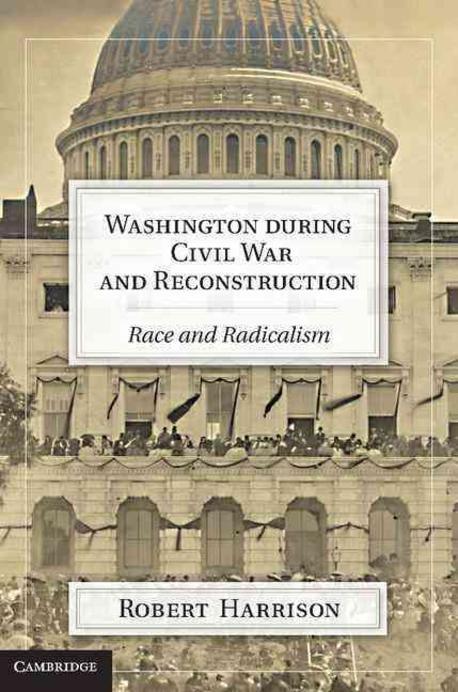
Dr Robert Harrison (1944??007) was a member of the Department of History and Welsh History at the University of Wales, Aberystwyth, for more than thirty years. His numerous publications on nineteenth- and early twentieth-century American politics, particularly on Congress and the District of Columbia, made a very significant contribution to the field. They include State and Society in Twentieth-Century America (1997) and Congress, Progressive Reform, and the New American State (Cambridge University Press, 2004). An active participant in the research community of American history, Dr Harrison was a long-standing member of BAAS and was closely involved in the British American Nineteenth Century Historians' organization (BrANCH), organizing two major conferences on American history in 2000 and 2004. Robert Harrison provides new insight into grassroots reconstruction after the Civil War and into the lives of those most deeply affected, the newly emancipated African Americans. Harrison argues that the District of Columbia was central to Republican efforts to reshape civil and political relations. Robert Harrison provides new insight into grass-roots Reconstruction after the Civil War and into the lives of those of those most deeply affected, the newly emancipated African Americans. Harrison argues that the District of Columbia, far from being marginal to the Reconstruction story, was central to Republican efforts to reshape civil and political relations, with the capital a testing ground for Congressional policy makers. "Robert Harrison provides new insight into grass-roots Reconstruction after the Civil War and into the lives of those of those most deeply affected, the newly emancipated African Americans"--"In this book, Robert Harrison tells the dramatic story of Washington, DC, during the post-Civil War Reconstruction in the nation's capital and of the lives of those of the most deeply affected, the newly emacipated African Americans. Harrison describes the ways in which federal agencies such as the Army and the Freedmen's Bureau attempted to assist Washington's free population and shows how officials struggled to address the social problems resulting from large-scale black migration. The study sheds new light on the political processes that led to the abandonment of Reconstruction and the onset of black disenfranchisement"-- In this provocative study, Robert Harrison provides new insight into grassroots reconstruction after the Civil War and into the lives of those most deeply affected, the newly emancipated African Americans. Harrison argues that the District of Columbia, far from being marginal to the Reconstruction story, was central to Republican efforts to reshape civil and political relations, with the capital a testing ground for Congressional policy makers. The study describes the ways in which federal agencies such as the Army and the Freedmen's Bureau attempted to assist Washington's freed population and shows how officials struggled to address the social problems resulting from large-scale African-American migration. It also sheds new light on the political processes that led to the abandonment of Reconstruction and the onset of black disfranchisement. In this provocative study Robert Harrison provides new insight into grass-roots Reconstruction after the Civil War and into the lives of those of those most deeply affected, the newly emancipated African Americans. Harrison argues that the District of Columbia, far from being marginal to the Reconstruction story, was central to Republican efforts to reshape civil and political relations, with the capital a testing ground for Congressional policy makers. The study describes the ways in which federal agencies such as the Army and the Freedmen's Bureau attempted to assist Washington's freed population and shows how officials struggled to address the social problems resulting from large-scale African-American migration. It also sheds new light on the political processes that led to the abandonment of Reconstruction and the onset of black disfranchisement. Finally, Washington, DC, during Civil War and Reconstruction is a valuable case study of municipal government in an era when Americans faced the challenges of a new urban-industrial society. "Building on the aphorism that all politics is local, Washington during Civil War and Reconstruction links the formation of national policy regarding emancipation and African American citizenship to the perceived need on the part of lawmakers, businessmen, and civic boosters to transform a southern village into an international capital city. Congressional legislators studied the local scene keenly, responding to the growing numerical and political presence of African American freed people. Using their constitutionally mandated control over the District of Columbia, Republicans and Democrats alike seized the opportunity to test policies that would ultimately apply to the various states and to the nation as a whole. With understated elegance, Robert Harrison provides insights into a dynamic that is every bit as relevant to the twenty-first century as it was to the nineteenth." - Joseph P. Reidy, Howard University "The transformations of Washington, D.C., during the American Civil War and Reconstruction left multiple marks in the nation's capital that are still visible today. In this book, the enormity of these transformations comes through on every page. Here is a deeply researched study that not only tell us of the people of Civil War-era Washington - former slaves, white and black politicians, society ladies and female reformers, city administrators, army men, Confederate sympathizers, and radical Republicans - but enriches our understanding of the institutions of the city, including national freedmen's aid societies and municipal improvement agencies determined to make the one-time backwater village into a modern American city. There are precious few studies that achieve what Harrison does in revealing how the Civil War and Reconstruction shaped society and the state at both the local and national levels." - Michael Vorenberg, Brown University "The transformations of Washington, D.C., during the American Civil War and Reconstruction left multiple marks in the nation's capital that are still visible today. In this book, the enormity of these transformations comes through on every page. Here is a deeply researched study that not only tell us of the people of Civil Warera Washington former slaves, white and black politicians, society ladies and female reformers, city administrators, army men, Confederate sympathizers, and radical Republicans but enriches our understanding of the institutions of the city, including national freedmen's aid societies and municipal improvement agencies determined to make the one-time backwater village into a modern American city. There are precious few studies that achieve what Harrison does in revealing how the Civil War and Reconstruction shaped society and the state at both the local and national levels." Michael Vorenberg, Brown University "Washington during Civil War and Reconstruction excavates in excruciating detail the politics of race and class - often trumpeted in explicitly racist language - that ultimately spurned a democracy that included African Americans. Part of this story will not be new to many readers but the details of the betrayal, culled from the minutia of the records of congressional debates, correspondence, executive documents, as well as Freedmen's Bureau and other records, make an important contribution. In the end, too many Republicans joined Democrats in condemning a world in which black men voted and black people claimed the rights of citizenship as a world that disfranchised and made 'slaves' of white people not only in the District of Columbia but throughout the nation." - Thavolia Glymph, Duke University "Washington during Civil War and Reconstruction excavates in excruciating detail the politics of race and class often trumpeted in explicitly racist language that ultimately spurned a democracy that included African Americans. Part of this story will not be new to many readers but the details of the betrayal, culled from the minutia of the records of congressional debates, correspondence, executive documents, as well as Freedmen's Bureau and other records, make an important contribution. In the end, too many Republicans joined Democrats in condemning a world in which black men voted and black people claimed the rights of citizenship as a world that disfranchised and made 'slaves' of white people not only in the District of Columbia but throughout the nation." Thavolia Glymph, Duke University Provides new insight into grassroots reconstruction after the Civil War, and into the lives of the newly emancipated African Americans. Robert Harrison provides new insight into grass-roots Reconstruction after the Civil War and into the lives of those of those most deeply affected, the newly emancipated African Americans.