



소개
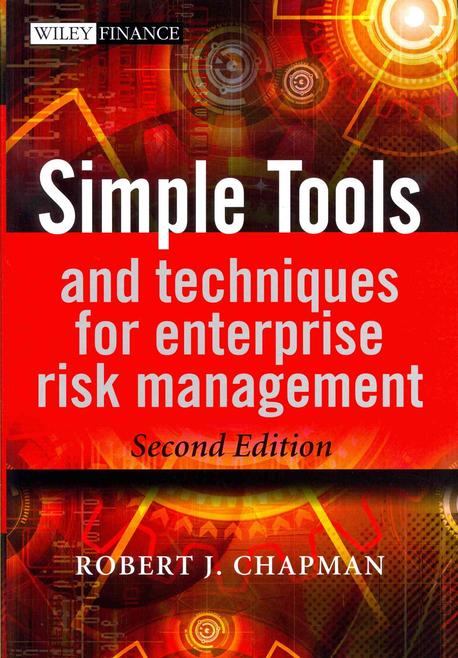
A business's ability to grow in the face of complex, unrelenting, ever-changing risk is the sin qua non of its competitive success. Unfortunately risk exposure is increasing unabated both in diversity and complexity at a breathtaking pace. In today's more interconnected business environment, where a lone trader can destroy, in a matter of hours, a reputation it took years to build, where the mere rumour of unsavoury accounting practices can send a company's stock price plummeting at near-lightening speed, and where the unscrupulous practices of a handful of Wall Street bankers can bring the world financial system to its knees, the need for a methodical, highly dynamic and all-encompassing approach to Enterprise Risk Management has never been greater. Representing a departure from traditional, compartmentalized risk management models, Enterprise Risk Management provides a fully integrated, "holistic" approach, in which risk management becomes an essential part of a business's organization, intrinsic to its strategic plan, structure and business processes. In this updated and substantially expanded edition of Simple Tools and Techniques for Enterprise Risk Management, Robert Chapman provides a blueprint for designing, planning, implementing and managing an Enterprise Risk Management programme suitable for every type of corporation. Building from the ground up, he describes the major sources of internal and external risk and arms readers with a retinue of powerful tools and techniques for addressing each in a manner that can be tailored to a company's unique needs, goals and culture. As clear, methodical and accessible as the Enterprise Risk Management model itself, the book explores the five key areas that must be considered when designing an effective Enterprise Risk Management programme: The relationship between corporate governance, internal control and risk management. The seven stages of the risk management process-including tools and techniques specific to each. The six primary sources of controllable internal risk, including financial, operational, technological, project management, business ethics and health and safety. The six main sources of external risk, namely: economic, environmental, legal, political, market, and social. Finding and working with a qualified risk practitioner, as considered from both the client's and consultant's perspectives. Fully revised and updated to meet the needs of today's risk practitioner, this 2nd Edition of Robert Chapman's acclaimed guide now includes chapters on the global financial crisis, project risk management, business ethics and health and safety, as well as updated chapters on US and UK corporate governance, providing an indispensable working resource for board members, executives, managers, and risk practitioners. Your business reputation can take years to build - and mere minutes to destroy. This book on enterprise risk management features materials on new threats, lessons from the recent financial crisis, and how businesses need to protect themselves in terms of business interruption, security, project and reputational risk management. Robert Chapman is the Director of Risk Management in the Middle East for AECOM, a publicly traded company on the New York Stock Exchange, and listed on the Fortune 500 as one of America's largest companies. Prior to this he held the position of Director of Risk Management at a number of European companies and has provided risk management consultancy services in Holland, Ireland, South Africa, Qatar, England and the UAE to companies within the pharmaceutical, aviation, marine, rail, broadcast, heritage, health, education, manufacturing, water, sport, oil and gas, property development, construction and media sectors. He was made a Fellow of both the Institute of Risk Management (UK) and the Association for Project Management (UK) for his contribution to the development of the discipline of risk management. He has provided guidance to the Chartered Institute of Accountants in England and Wales in the form of a risk management handbook and was a co-author of Management of Risk: Guidance for Practitioners published by the Office of Government Commerce and Managing Business Risk published by Kogan Page. He has had articles on the subject of risk management published in three languages and has a PhD in risk management "Risk Management is such a broad subject and varies depending on the organization and the industry. Many standards and guidelines around the world try to encapsulate risk into one set of parameters but typically suffer as they are from one particular perspective. Robert Chapman however does not conform to this single minded approach and provides us with a mixture of current risk management issues, techniques and case studies to provide a broad and yet still comprehensive view on risk management that is relevant to any industry sector. As such, there is something here for everyone who is in the risk management field and should be a mandatory addition to any risk manager's bookshelf." - Clayton Meteyard, Manager - Risk and Insurance, Etihad Rail, UAE "This valuable text provides both the student and the practitioner with comprehensive coverage of the key elements which must be considered in respect of Risk Management." - Dr Alistair Somerville Ford FTS, Chairman - Institute of Commercial Management, UK "The global financial crisis and in particular the demise of high profile companies has emphasised like never before the need for effective Enterprise Risk Management. This significantly expanded text will enable the reader, whether student, risk practitioner, auditor or board member to understand both the sources of risk and a process for implementing ERM. The clear and concise style of writing will provide a useful reference in navigating the ever expanding maze of business risk." - Steve Wilmot, Risk Manager - Leighton Contractors PTY Limited, Australia " In today's highly volatile risk reality where ERM is the future of risk management, Chapman's book provides an in-depth insight into ERM. By combining theoretical and practical ERM knowledge from both a strategic and an operational angle, Chapman creates a valuable source of references for risk practitioners. While imminent risk issues are addressed, the book discusses how these risks can be managed most effectively across the entire organisation. The book aims to introduce risk professionals to key ERM aspects, and that's exactly what it does." - Joanna Keith, Risk Management, JP Morgan, UK " Rob Chapman's book is modest in its title, yet is, at its heart, one of the best guides on how to 'do' Enterprise Risk Management, currently in print. Now completely revised to recognise the development of ISO31000 (the International Risk Management standard) and recent changes in governance and business ethics, this very accessible text is a must for anyone implementing ERM, irrespective of their business sector, country or background." - Steve Fowler, Chief Executive, Institute of Risk Management, UK "Risk Management is such a broad subject and varies depending on the organization and the industry. Many standards and guidelines around the world try to encapsulate risk into one set of parameters but typically suffer as they are from one particular perspective. Robert Chapman however does not conform to this single minded approach and provides us with a mixture of current risk management issues, techniques and case studies to provide a broad and yet still comprehensive view on risk management that is relevant to any industry sector. As such, there is something here for everyone who is in the risk management field and should be a mandatory addition to any risk managers bookshelf." - Clayton Meteyard, Manager - Risk and Insurance, Etihad Rail, UAE "This valuable text provides both the student and the practitioner with comprehensive coverage of the key elements which must be considered in respect of Risk Management." - Dr Alistair Somerville Ford FTS, Chairman - Institute of Commercial Management, UK "The global financial crisis and in particular the demise of high profile companies has emphasised like never before the need for effective Enterprise Risk Management. This significantly expanded text will enable the reader, whether student, risk practitioner, auditor or board member to understand both the sources of risk and a process for implementing ERM. The clear and concise style of writing will provide a useful reference in navigating the ever expanding maze of business risk." - Steve Wilmot, Risk Manager - Leighton Contractors PTY Limited, Australia "In todays highly volatile risk reality where ERM is the future of risk management, Chapmans book provides an in-depth insight into ERM. By combining theoretical and practical ERM knowledge from both a strategic and an operational angle, Chapman creates a valuable source of references for risk practitioners. While imminent risk issues are addressed, the book discusses how these risks can be managed most effectively across the entire organisation. The book aims to introduce risk professionals to key ERM aspects, and thats exactly what it does." - Joanna Keith, Risk Management, JP Morgan, UK "Rob Chapmans book is modest in its title, yet is, at its heart, one of the best guides on how to do Enterprise Risk Management, currently in print. Now completely revised to recognise the development of ISO31000 (the International Risk Management standard) and recent changes in governance and business ethics, this very accessible text is a must for anyone implementing ERM, irrespective of their business sector, country or background." - Steve Fowler, Chief Executive, Institute of Risk Management, UK The need to understand risks and opportunities is inescapable when striving to grow any business. Hence a business's ability to prosper in the face of risk is a prime indicator of its ability to compete. However the speed of change in markets, technology and communication combined with the diverse sources of risk, means that for risk management to be effective, it has to be methodical and broad in its approach. Additionally it has to be ingrained in the business psyche, the 'normal way of doing things'. Simple Tools and Techniques for Enterprise Risk Management, Second Edition builds from the bottom up to provide a readily understood methodical approach to risk management, while at the same time describing the diverse sources of risk, to encourage a broad approach. To convey the context of enterprise risk management, the book describes both internal and external sources of risk. The book is divided into five parts as described below, to aid the reader and provide ease of navigation. Part 1 describes the catalysts for and developments in corporate governance, internal control and risk management. Part 2 describes the risk management process being composed of six stages. The inputs, outputs, constraints and enablers of each stage are described to aid implementation. Part 3 describes what are termed management applications, those sources of risk that to a large extent are under the control of any individual business. Part 4 describes the external influences on a business which present sources of risk which in the main are beyond the control of any one business Part 5 examines the procurement of risk management services by a client together with the steps a consultant engages in, in terms of interviewing the client prior to an assignment and the preparation of a proposal, to secure a new commission. The book will be fully updated to reflect the changes in current practice, and feature new materials on new threats, lessons from the recent financial crisis, and how businesses need to protect themselves in terms of business interruption, security, project and reputational risk management. Information technology has the ability to truly revolutionise how a business operates but a total dependence on it means that if it fails, for many, business operations are brought to a standstill. Intellectual property and the products of research and development will determine future market share and growth. If this 'property' is not protected through appropriate security measures that anticipated market share and the profit associated with it will evaporate when it is lost. Businesses implement change through projects. Without managing the risk to that change can at the very least erode bottom line performance and in the most severe cases bring about the demise of a business. Project risk management is now a mature discipline and its implementation has been recently been supported by the implementation of ISO 31000. Project risk management needs to be both implemented in a systematic methodical way but more importantly embedded within an organisation so that it becomes part of its DNA. Reputations can take years to build but hours to destroy. Reputational management cannot be an ad hoc informal process but one that is mapped, implemented and controlled. Your business reputation can take years to build-and mere minutes to destroy The range of business threats is evolving rapidly but your organization can thrive and gain a competitive advantage with your business vision for enterprise risk management. Trends affecting markets-events in the global financial markets, changing technologies, environmental priorities, dependency on intellectual property-all underline how important it is to keep up to speed on the latest financial risk management practices and procedures. This popular book on enterprise risk management has been expanded and updated to include new themes and current trends for today's risk practitioner. It features up-to-date materials on new threats, lessons from the recent financial crisis, and how businesses need to protect themselves in terms of business interruption, security, project and reputational risk management. Project risk management is now a mature discipline with an international standard for its implementation. This book reinforces that project risk management needs to be systematic, but also that it must be embedded to become part of an organization's DNA. This book promotes techniques that will help you implement a methodical and broad approach to risk management. The author is a well-known expert and boasts a wealth of experience in project and enterprise risk management Easy-to-navigate structure breaks down the risk management process into stages to aid implementation Examines the external influences that bring sources of business risk that are beyond your control Provides a handy chapter with tips for commissioning consultants for business risk management services It is a business imperative to have a clear vision for risk management. Simple Tools and Techniques for Enterprise Risk Management, Second Edition shows you the way. Your business reputation can take years to build-and mere minutes to destroy The range of business threats is evolving rapidly but your organization can thrive and gain a competitive advantage with your business vision for enterprise risk management. Trends affecting markets-events in the global financial markets, changing technologies, environmental priorities, dependency on intellectual property-all underline how important it is to keep up to speed on the latest financial risk management practices and procedures. This popular book on enterprise risk management has been expanded and updated to include new themes and current trends for todays risk practitioner. It features up-to-date materials on new threats, lessons from the recent financial crisis, and how businesses need to protect themselves in terms of business interruption, security, project and reputational risk management. Project risk management is now a mature discipline with an international standard for its implementation. This book reinforces that project risk management needs to be systematic, but also that it must be embedded to become part of an organizations DNA. This book promotes techniques that will help you implement a methodical and broad approach to risk management. The author is a well-known expert and boasts a wealth of experience in project and enterprise risk management Easy-to-navigate structure breaks down the risk management process into stages to aid implementation Examines the external influences that bring sources of business risk that are beyond your control Provides a handy chapter with tips for commissioning consultants for business risk management services It is a business imperative to have a clear vision for risk management. Simple Tools and Techniques for Enterprise Risk Management, Second Edition shows you the way. Your business reputation can take years to build-and mere minutes to destroy The range of business threats is evolving rapidly but your organization can thrive and gain a competitive advantage with your business vision for enterprise risk management.