

소개
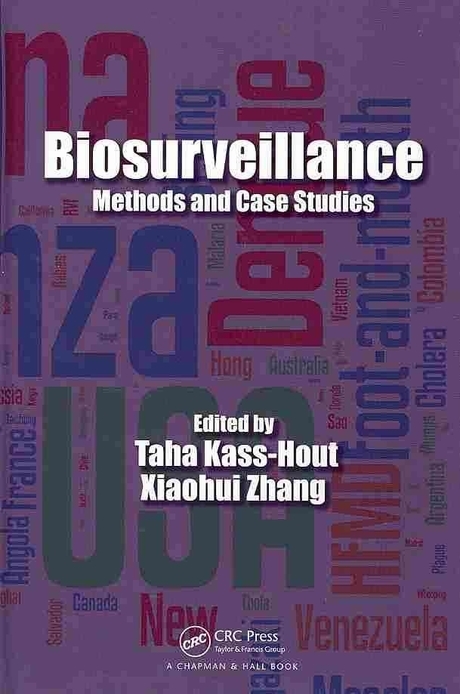
This title addresses the problems and promise of timely biosurveillance, with a particular focus on the role it must play. It describes a general concept of operations with reference information system architecture and investigates the primary assumptions that are needed to assure the success of a biosurveillance initiative. Taha Kass-Houthas over 14 years of experience in health, public health, and informatics. He has led research and development initiatives, the critical assessment of new and emerging health IT technologies, and the development of new capabilities and solutions in health and public health for federal, state, commercial, and international health organizations. A member of several professional societies, Dr. Kass-Hout has published in peer-reviewed journals, presented at numerous national and international forums, and been an invited guest speaker at various health and policy events. He earned his M.Sc. and M.D. from the University of Texas. In addition, he has had clinical training at Harvard's Beth Israel Deaconess Medical Center and the University of Texas Health Sciences Center. Xiaohui Zhangis the president of International Public Health Institute, a nonprofit organization. For over 20 years, Dr. Zhang has led the scientific effort in the development of infectious disease surveillance systems, disease outbreak early detection and early warning systems, public health emergency preparedness and response systems, and information systems for comprehensive health care management. He has authored more than 40 publications in information technology, disease surveillance, decision making support, operational research, environmental modeling, artificial intelligence, simulation, and electrical engineering. As evidenced by the anthrax attacks in 2001, the SARS outbreak in 2003, and the H1N1 influenza pandemic in 2009, a pathogen does not recognize geographic or national boundaries, often leading to devastating consequences. Automated biosurveillance systems have emerged as key solutions for mitigating current and future health-related events. Focusing on this promising public health innovation, Biosurveillance: Methods and Case Studies discusses how these systems churn through vast amounts of health-related data to Support epidemiologists and public health officials in the early identification, situation awareness, and response management of natural and man-made health-related events. As evidenced by the anthrax attacks in 2001, the SARS outbreak in 2003, and the H1N1 influenza pandemic in 2009, a pathogen does not recognize geographic or national boundaries, often leading to devastating consequences. Automated biosurveillance systems have emerged as key solutions for mitigating current and future health-related events. Focusing on this promising public health innovation, Biosurveillance: Methods and Case Studiesdiscusses how these systems churn through vast amounts of health-related data to support epidemiologists and public health officials in the early identification, situation awareness, and response management of natural and man-made health-related events. The book follows a natural sequence from theory to application. The initial chapters build a foundation while subsequent chapters present more applied case studies from around the world, including China, the United States, Denmark, and the Asia-Pacific region. The contributors share candid, first-hand insights on lessons learned and unresolved issues that will help chart the future of biosurveillance. As this book illustrates, biosurveillance operates in a complex, multidimensional problem space that incorporates varied data. Capturing the progress of modern-day pioneers who are walking in John Snow "s footsteps, this volume shows how contemporary information technology can be applied to the age-old challenge of combating the spread of disease and illness. Biosurveillance: A Health Protection Priorityaddresses the problems and promise of timely biosurveillance, with a particular focus on the role it must play. It describes a general concept of operations with reference information system architecture and investigates the primary assumptions that are needed to assure the success of a biosurveillance initiative. Numerous case studies focus on local, regional, and national implementation. The book also explores future innovations in biosurveillance, including advances in analytical methods, modeling, and simulation. Biosurveillance: Methods and Case Studies addresses the problems and promise of timely biosurveillance, with a particular focus on the role it must play. It describes a general concept of operations with reference information system architecture and investigates the primary assumptions that are needed to assure the success of a biosurveillance initiative. Numerous case studies focus on local, regional, and national implementation. The book also explores future innovations in biosurveillance, including advances in analytical methods, modeling, and simulation. Biosurveillance: Methods and Case Studies addresses the problems and promise of timely biosurveillance, with a particular focus on the role it must play. It describes a general concept of operations with reference information system architecture and investigates the primary assumptions that are needed to assure the success of a biosurveillance initiative. Numerous case studies focus on local, regional, and national implementation. The book also explores future innovations in biosurveillance, including advances in analytical methods, modeling, and simulation. Since the dawn of our collective memory, plague and contagious disease have been frightening, unseen, implacable enemies. It is not surprising that efforts to understand contagious illness extend back nearly as far as the written word. Both human and animal populations are densely packed in artificial environments. Pathogens have developed resistance to established treatments, and recently, the anthrax attacks of 2001 have illustrated that deliberate propagation of an infectious disease is a real threat in the modern age. The geographic barriers that have provided protection in the past have been long bypassed. . A pathogen does not respect geographic or national boundariesOne of the most exciting innovations in public health is the development of automated biosurveillance systems that can churn through vast amounts of health-related data to support early identification, situation awareness, and response management for epidemiologists and public health officials. This book captures the story of modern-day involved with combating the spread of disease and illness.Despite the excitement that has greeted the initial generation of biosurveillance systems, several difficult challenges remain. As this book illustrates, biosurveillance operates in a complex, multidimensional problem space, and can be viewed from many different perspectives. There is a tension between the most reliable sources of data (such as confirmed laboratory results) and the syndromic approaches that offer an earlier opportunity for detection (emergency department (ED) chief complaints, or over the counter sales). Animal data, vital statistics, and environmental data may identify the type of endemic relationships that Hippocrates first documented.One of the most frequently noted shortcomings was that the role of humans (epidemiologists, public health officials, and the system developers themselves) was not well defined as these systems primarily focused on automation. Concerns raised these questions:How were alerts to be validated and communicated? How could the system better support multiple organizations at the local, state/province, national, and even global level? What elements from the "information storm" are most important to convey accurate situation awareness at these different levels? How can such a system support different communities of interest, such as respiratory or foodborne illnesses, and different types of users? How easily can the system incorporate new data sources, and identify new types of threats?Practical considerations, particularly cost, are also important. Some existing systems are proving too costly to operate and maintain, let alone expand to incorporate more data sources. Quantifying the added value provided by a biosurveillance system will be necessary for increasing public investments to support them and making widespread deployment of these systems a reality. Innovators today are pushing the envelope as to what we would consider a biosurveillance system. Some are taking advantage of new technologies such as Web-crawling, remote sensing, and SMS texting to provide flexible, lower-cost input channels for surveillance. Others are adopting a system of systems approach, where a given system will need to reason based on its own raw data as well as conclusions from other automated systems. The scope of these systems is also expanding from early detection to support the entire outbreak and management cycle.This book follows a natural sequence from theory to application. The initial chapters build a foundation of knowledge. Later chapters contain more applied case studies written by experts from the field relating their practical experience within their professional domain. These studies will give you an und While having its roots in 21st-century infectious disease threats to health on a grand scale, biosurveillance has come to encompass a broader scope of the science and practice of managing population health-related data and information so that effective action can be taken to mitigate adverse health effects from urgent threats. This expansive scope is reflected in the diverse collection of reports and perspectives brought together in Biosurveillance: Methods and Case Studies. ??This text provides an important venue for the sharing of ideas and engagement of health scientists and practitioners that will be needed to assure progress. -From the Foreword by Daniel M. Sosin, MD, MPH, Acting Director, Office of Public Health Preparedness and Response, Centers for Disease Control and Prevention Biosurveillance: A Health Protection Priority addresses the problems and promise of timely biosurveillance, with a particular focus on the role it must play. It describes a general concept of operations with reference information system architecture and investigates the primary assumptions that are needed to assure the success of a biosurveillance initiative. Numerous case studies focus on local, regional, and national implementation. The book also explores future innovations in biosurveillance, including advances in analytical methods, modeling, and simulation.