

소개
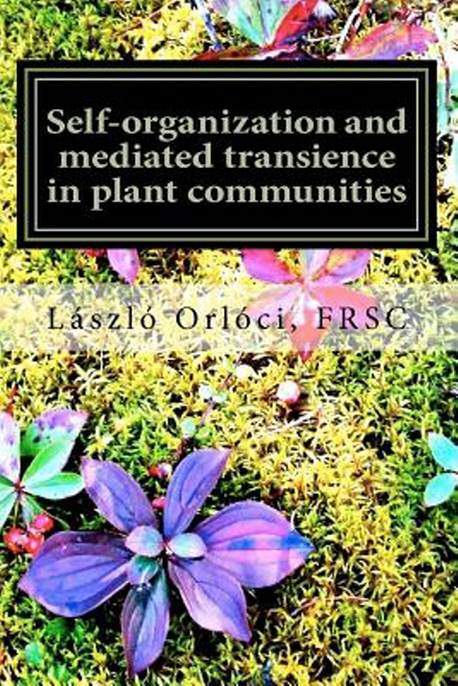
L?zl?Orl?i was born in Hungary in 1932. He holds degrees in forest engineering (DFE Sopron), forestry science and biology (BSF, MSc, PhD University of British Columbia), and DSc h.c. in biology (University of Trieste). Orl?i held appointments as NATO Science Fellow (University College of North Wales), professor (University of Western Ontario), and visiting professor at universities in the Americas, the Pacific, Asia, and Europe. He is an INTECOL Distinguished Statistical Ecologists, external (academician) member of the Hungarian Academy of Sciences, and regular Fellow of the Academy of Sciences of the Royal Society of Canada. A novel, signal theoretical solution is sketched out for the ecological problem of how to identify and quantitatively express the assembly rules of plant communities. A case study for testing the solution leads to the astonishing conclusion that the phylogenetic signal outperforms the current environmental signal in intensity close to 7 to 1. This indicates high stability and low inclination to environment mediated transience in the community. The Book, with central theme as the governance of compositional transition in plant communities, picks up a thread of thought which challenged ecological theory through most of its history. The idea dominating the current discourse is inherent in the conjecture that two couplets of high-level rules and rule-specific mechanisms exist, one which promotes stability and the other one forces instability. In testing the reality of this conjecture, the ecological approach assumes access specific resources. In the Book these include a signal theoretical model, a path to the long past of phylogeny, and a set of well-conditioned gradient data from a dynamic environment. The resources in hands, the Book "s modus operandi involves linking the modulation of diversity amplitude oscillations in metacommunities, taken in the broadest sense, to signals from historic and current sources, such as phylogeny, current environment, and random events. Once isolated, the signals " intensity is measured and importance defined.The Book presents results which justify generalisations regarding the rules of govern-ance on two counts with potentially far reaching consequences: the phylogenetic sig-nal is linked to biological self-organisation which promotes stability in the meta com-munity; the current environmental signal is linked to transience which forces instabil-ity. Most surprising is the close to 7 folds dominance of the phylogenetic signal "s in-tensity over the current environmental signal at a rate 87 to 13. Should phylogenetic signal "s dominance stand up for scrutiny in other applications as a reoccurring conclu-sion, it should have far-reaching implications concerning the interpretation of the de-stabilizing effects expected under predicted rates of global climate warming. The text includes detailed discussions of approach and model, a step-by-step example from the floodplain of the Coquihalla River at Hope in British Columbia, and a list of key references. All numerical results are presented in appendices. For book-related information please see the introductory pages or contact: SCADA.LONDON@GMAIL.COM