



소개
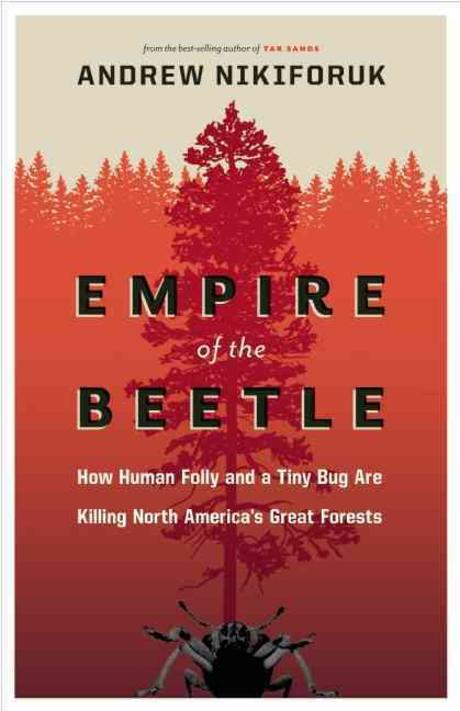
Andrew Nikiforukis an award-winning journalist who has written about education, economics, and the environment for the last two decades. His books include Pandemonium, Saboteurs: Wiebo Ludwig's War Against Oil, which won the Governor General's Literary Award for Non-Fiction, and The Fourth Horseman: A Short History of Plagues, Scourges and Emerging Viruses. His bestselling book Tar Sandswon the Rachel Carson Environment Book Award. Beginning in the late 1980s, a series of pine beetle (also known as the bark beetle) outbreaks unsettled iconic forests and communities across western North America. An insect the size of a rice kernel eventually killed more than 30 billion pine and spruce trees from Alaska to New Mexico. The pine beetle didn't act alone. Misguided science, out-of-control logging, bad public policy, and a hundred years of fire suppression released the world's oldest forest manager from all natural constraints. The beetles exploded wildly in North America and then crashed, leaving in their wake grieving landowners, humbled scientists, hungry animals, and altered watersheds. Although climate change triggered this complex event, human arrogance assuredly played a role. And despite the billions of public dollars spent on control efforts, the beetles burn away like a fire that can't be put out. Author Andrew Nikiforukdraws on first-hand accounts from entomologists, botanists, foresters, and rural residents to investigate this unprecedented pine beetle plague, its startling implications, and the lessons it holds. Written in an accessible way, Empire of the Beetleis the only book on the pine beetle epidemic that is devastating the North American West. "Nikiforuk leavens this tragic, instructive history with curious facts about the complex, intelligent insect"-- Publishers Weekly "A terrific book on a terrifying subject... a chilling, fascinating, and important contribution to our understanding of a rapidly changing world."-- John Vaillant, author of The Tigerand The Golden Spruce "A compelling look at what may be the single biggest impact of climate change, and a harbinger of life to come on a warming planet." --Jim Robbins, Science Journalist, The New York Times "Empire of the Beetle is a work of great skill and passion, and vital to anyone courageous enough to be interested in the ecology of the future."--Rick Bass, author of Winter: Notes From Montana "[T]he Iliad of the bark beetles. It really demonstrates how intertwined nature is... as Andrew shows so well, we are part of nature." --John Perlin, leading U.S. solar energy expert and author of A Forest Journey "Nikiforuk leavens this tragic, instructive history with curious facts about the complex, intelligent insect"-- Publishers Weekly "Sometimes called the "Katrina of the West," these infestations received very little publicity but caused the loss of millions of dollars worth of lumber ...Well written and informative... Highly Recommended" Choice Reviews "A terrific book on a terrifying subject... a chilling, fascinating, and important contribution to our understanding of a rapidly changing world."-- John Vaillant, author of The Tigerand The Golden Spruce "A compelling look at what may be the single biggest impact of climate change, and a harbinger of life to come on a warming planet." --Jim Robbins, Science Journalist, The New York Times "Empire of the Beetle is a work of great skill and passion, and vital to anyone courageous enough to be interested in the ecology of the future."--Rick Bass, author of Winter: Notes From Montana "[T]he Iliad of the bark beetles. It really demonstrates how intertwined nature is... as Andrew shows so well, we are part of nature." --John Perlin, leading U.S. solar energy expert and author of A Forest Journey " Andrew Nikiforuk's Empire of the Beetleis not just a primer on the life cycle, usefulness and recent rampages of the tribe of bark beetles that have killed more than 30 billion pine and spruce trees in Canada and the American West...It is not simply another tome that blames all hell on climate change...It is at its best a principled reflection on what ecologist Crawford Holling has called 'the pathology of resource management.' The never-before-seen complete virulence of the bark beetles in the conifer forests -- with a few aspen forests thrown in for good measure -- is not just the result of some wrong turn in forest policy. It is a result of the mistaken notion that any forest policy is better than learning from nature and following nature's ways." "A terrific book on a terrifying subject. Andrew Nikiforukis the first person to put this ominous New World catastrophe into such vivid context. Empire of the Beetleis a chilling, fascinating, and important contribution to our understanding of a rapidly changing world." "Drawing on first hand accounts from entomologists, botanists, foresters and rural residents in Canada and the U.S., Nikiforuk[digs] into the history of bark beetles." "In this remarkable book...Nikiforukapplies his usual skill and passion to a fascinating subject." "It is impossible to even begin enumerating the wealth of astounding facts peppering this book, so I will simply note that Nikiforukartfully breaks up his science with a social history of mankind's age -- old fascination with beetles, from Aesop to Darwin...fascinating and thought-provoking..." "It's only fitting that a renowned gadfly like Andrew Nikiforuk, the award-winning Calgary-based journalist and author with an interest in education, economics and the environment, should turn his inquisitive nature to the world of bugs. In his latest, relatively short yet scholarly investigation, Nikiforuk takes readers into the fascinating world of beetles and how...the mountain pine beetle...is decimating pine forests throughout North America...Each of the book's 10 chapters stands on its own, yet is skilfully connected to the book's main message -- that the relationship between beetles and trees is mutually beneficial, and when we mess with nature, we do so at our own peril." " Nikiforukdraws on interviews with scientists, foresters and rural residents to paint a nuanced picture of beetle outbreaks and their long-term implications." "Nikiforuktallies the human and ecological costs of bark beetles' destruction of wide swathes of trees, costs that are exacerbated by climate change. His plainspoken writing style is especially poignant as he gives voice to the devastating human experience of lost forests. Recommended." "The ultimate message in Empire of the Beetleis that of human folly. Nikiforukshows that many of the scientists who were originally contracted to study the bark beetle with the aim of controlling it eventually came around to seeing the beetle as a natural agent that manages forests. As Nikiforukconcludes: if you remove one agent of renewal in a forest (such as fire), another will take its place. And so, following centuries of forest management, the stage has been set for Empire of the Beetle." "...the world's only page-turner about beetles....[ Nikiforuk] has a clear, muscular style and a masterful command of simile, metaphor and analogy to illustrate otherwise dull or obscure scientific data. His research is awe-inspiring, his conclusions irrefutable, and the implications dismal." "This fascinating and thought-provoking book about an ancient insect pest exposes the frailty of seemingly stable man-managed habitats and presages the climate-induced ordeals to come." "With equal attention to the destructive actions of insects and humans alike, Canadian journalist Nikiforukdescribes the decimation of expanses of conifers by bark beetles... Nikiforuk's florid language, affection for the beetles, and scorn for the humans in his story are sometimes extravagant, but lighten the tone of what in other hands could be an overwhelmingly depressing topic." Beginning in the late 1980s, a series of improbable bark beetle outbreaks unsettled iconic forests and communities across western North America. An insect the size of a rice kernel eventually killed more than 30 billion pine and spruce trees from Alaska to New Mexico. Often appearing in masses larger than schools of killer whales, the beetles engineered one of the world's greatest forest die-offs since the deforestation of Europe by peasants between the eleventh and thirteenth centuries. The beetle didn't act alone. Misguided science, out-of-control logging, bad public policy, and a hundred years of fire suppression created a volatile geography that released the world's oldest forest manager from all natural constraints. Like most human empires, the beetles exploded wildly and then crashed, leaving in their wake grieving landowners, humbled scientists, hungry animals, and altered watersheds. Although climate change triggered this complex event, human arrogance assuredly set the table. With little warning, an ancient insect pointedly exposed the frailty of seemingly stable manmade landscapes. And despite the billions of public dollars spent on control efforts, the beetles burn away like a fire that can't be put out. Drawing on first-hand accounts from entomologists, botanists, foresters, and rural residents, award-winning journalist Andrew Nikiforuk investigates this unprecedented beetle plague, its startling implications, and the lessons it holds.