

소개
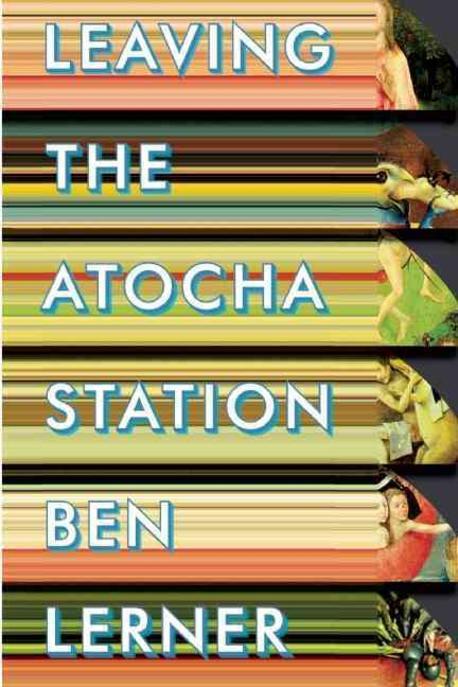
Born in Topeka, Kansas, in 1979, Ben Lerner is the author of three books of poetry The Lichtenberg Figures, Angle of Yaw, and Mean Free Path. He has been a finalist for the National Book Award and the Northern California Book Award, a Fulbright Scholar in Spain, and the recipient of a 2010-2011 Howard Foundation Fellowship. In 2011 he became the first American to win the Preis der Stadt Munster fur Internationale Poesie. Leaving the Atocha Stationis his first novel. Adam Gordon is a brilliant, if highly unreliable, young American poet on a prestigious fellowship in Madrid, struggling to establish his sense of self and his relationship to art. What is actual when our experiences are mediated by language, technology, medication, and the arts? Is poetry an essential art form, or merely a screen for the reader's projections? Instead of following the dictates of his fellowship, Adam's "research" becomes a meditation on the possibility of the genuine in the arts and beyond: are his relationships with the people he meets in Spain as fraudulent as he fears his poems are? A witness to the 2004 Madrid train bombings and their aftermath, does he participate in historic events or merely watch them pass him by? In prose that veers between the comic and tragic, the self-contemptuous and the inspired, Leaving the Atocha Stationis a portrait of the artist as a young man in an age of Google searches, pharmaceuticals, and spectacle. Born in Topeka, Kansas, in 1979, Ben Lernerholds a BA in political science and an MFA in creative writing from Brown University and teaches at Brooklyn College. The author of three books of poetry The Lichtenberg Figures, Angle of Yaw,and Mean Free Path,Lerner has been a finalist for the National Book Award and the Northern California Book Award, a Fulbright Scholar in Spain, and the recipient of a 2010-2011 Howard Foundation Fellowship. In 2011 he became the first American to win the Preis der Stadt Munster fur Internationale Poesie. Leaving the Atocha Stationis his first novel. From a National Book Award finalist, this ironic first novel captures the angst of the young American abroad. "Adam should be insufferable company, but Mr. Lerner, whose previous books are poetry collections, writes so candidly and exquisitely about Adam's falseness that the character comes to seem lovably errant. . . . Leaving the Atocha Stationis a marvelous novel, not least because of the magical way that it reverses the postmodernist spell, transmuting a fraudulent figure into a fully dimensional and compelling character."-- The Wall Street Journal "[A] noteworthy debut . . . . Lerner has fun with the interplay between the unreliable spoken word and subtleties in speech and body language, capturing the struggle of a young artist unsure of the meaning or value of his art. . . . Lerner succeeds in drawing out the problems inherent in art, expectation, and communication. And his Adam is a complex creation, relatable but unreliable, humorous but sad, at once a young man adrift and an artist intensely invested in his surroundings."-- Publishers Weekly "Ben Lerner's first novel, coming on the heels of three outstanding poetry collections, is a darkly hilarious examination of just how self-conscious, miserable, and absurd one man can be. . . . Lerner's writing [is] beautiful, funny, and revelatory."-- Deb Olin Unferth, Bookforum "A hilarious and insightful account of an artist's development in the digital age."-- Electric Literature "The first novel from Ben Lerner, a finalist for the National Book Award in poetry, explores with humor and depth what everyone assumes is OK to overlook. . . . Ben Lerner's phrases meander, unconcerned tourists, taking exotic day trips to surprising clauses before returning to their familiar hostels of subject and predicate. . . . [A]n honest, exciting account of what it's like to be a fairly regular guy in fairly regular circumstances . . . [and] somehow it's more incredible, and more modern a dilemma, than the explosives."-- Minneapolis Star Tribune "I admire Ben's poetry, but I love to death his new book, Leaving the Atocha Station. Ben Lerner's novel . . . ?hronicles the endemic disease of our time: the difficulty of feeling. . .' [A] significant book."-- David Shields, Los Angeles Review of Books "In his adroitly interiorized first novel . . . Lerner makes this tale of a nervous young artist abroad profoundly evocative by using his protagonist's difficulties with Spanish, fear of creativity, and mental instability to cleverly, seductively, and hilariously investigate the nature of language and storytelling, veracity and fraud. As Adam's private fears are dwarfed by terrorist train attacks, Lerner casts light on how we must constantly rework the narrative of our lives to survive and flourish."-- Donna Seaman, Booklist " Leaving the Atocha Stationis, among other things, a character-driven ?age-turner' and a concisely definitive study of the "actual" versus the ?irtual' as applied to relationships, language, poetry, experience. It's funny and affecting and as meticulous and "knowing" in its execution of itself, I feel, as Ben's poetry collections are."-- Tao Lin, The Believer "Utterly charming. Lerner's self-hating, lying, overmedicated, brilliant fool of a hero is a memorable character, and his voice speaks with a music distinctly and hilariously all his own." -- Paul Auster "An extraordinary novel about the intersections of art and reality in contemporary life." -- John Ashbery "Ben Lerner incisively explores the way our own obsessive critical thinking can make us feel that our role in the world is falsified, unreal, and inauthentic, even as, without knowing it, we''re slowly growing into our future skin. Leaving the Atocha Stationis a deft and meticulous reading of the development of an artist." -- Brian Evenson "[A] noteworthy debut . . . . Lerner has fun with the interplay between the unreliable spoken word and subtleties in speech and body language, capturing the struggle of a young artist unsure of the meaning or value of his art. . . . Lerner succeeds in drawing out the problems inherent in art, expectation, and communication. And his Adam is a complex creation, relatable but unreliable, humorous but sad, at once a young man adrift and an artist intensely invested in his surroundings."-- Publishers Weekly "A hilarious and insightful account of an artist's development in the digital age."-- Electric Literature "I admire Ben's poetry, but I love to death his new book, Leaving the Atocha Station. Ben Lerner's novel . . . ?hronicles the endemic disease of our time: the difficulty of feeling. . .' [A] significant book."-- David Shields, Los Angeles Review of Books "One of the Top 10 of 2011. . . . [ Leaving the Atocha Station] is remarkable for its ability to be simultaneously warm, ruminative, heart-breaking, and funny."-- Shelf Unbound " Leaving the Atocha Stationis, among other things, a character-driven ?age-turner' and a concisely definitive study of the "actual" versus the ?irtual' as applied to relationships, language, poetry, experience. It's funny and affecting and as meticulous and "knowing" in its execution of itself, I feel, as Ben's poetry collections are."-- The Believer "Lerner's novel is timely and relevant and, most importantly, a damn good book."-- Hey Small Press "Utterly charming. Lerner's self-hating, lying, overmedicated, brilliant fool of a hero is a memorable character, and his voice speaks with a music distinctly and hilariously all his own." -- Paul Auster "An extraordinary novel about the intersections of art and reality in contemporary life." -- John Ashbery "Ben Lerner incisively explores the way our own obsessive critical thinking can make us feel that our role in the world is falsified, unreal, and inauthentic, even as, without knowing it, we're slowly growing into our future skin. Leaving the Atocha Stationis a deft and meticulous reading of the development of an artist." -- Brian Evenson "[A] noteworthy debut . . . . Lerner has fun with the interplay between the unreliable spoken word and subtleties in speech and body language, capturing the struggle of a young artist unsure of the meaning or value of his art. . . . Lerner succeeds in drawing out the problems inherent in art, expectation, and communication. And his Adam is a complex creation, relatable but unreliable, humorous but sad, at once a young man adrift and an artist intensely invested in his surroundings."-- Publishers Weekly "Utterly charming. Lerner's self-hating, lying, overmedicated, brilliant fool of a hero is a memorable character, and his voice speaks with a music distinctly and hilariously all his own." -- Paul Auster "An extraordinary novel about the intersections of art and reality in contemporary life." -- John Ashbery "Ben Lerner incisively explores the way our own obsessive critical thinking can make us feel that our role in the world is falsified, unreal, and inauthentic, even as, without knowing it, we're slowly growing into our future skin. Leaving the Atocha Stationis a deft and meticulous reading of the development of an artist." -- Brian Evenson "[A] subtle, sinuous, and very funny first novel. . . . [ Leaving the Atocha Station] has a beguiling mixture of lightness and weight. There are wonderful sentences and jokes on almost every page. Lerner is attempting to capture something that most conventional novels, with their cumbersome caravans of plot and scene and "conflict," fail to do: the drift of thought, the unmomentous passage of undramatic life. . . . But it is one of the paradoxes of this cunning book that what might seem a skeptically postmodern comedy is also an earnestly old-fashioned seeker of the real--that other thing."-- James Wood, The New Yorker " Leaving the Atocha Stationis a marvelous novel, not least because of the magical way that it reverses the postmodernist spell, transmuting a fraudulent figure into a fully dimensional and compelling character."-- The Wall Street Journal "[A] noteworthy debut . . . . Lerner has fun with the interplay between the unreliable spoken word and subtleties in speech and body language, capturing the struggle of a young artist unsure of the meaning or value of his art. . . . Lerner succeeds in drawing out the problems inherent in art, expectation, and communication. And his Adam is a complex creation, relatable but unreliable, humorous but sad, at once a young man adrift and an artist intensely invested in his surroundings."-- Publishers Weekly "Ben Lerner's first novel, coming on the heels of three outstanding poetry collections, is a darkly hilarious examination of just how self-conscious, miserable, and absurd one man can be. . . . Lerner's writing [is] beautiful, funny, and revelatory."-- Deb Olin Unferth, Bookforum "A hilarious and insightful account of an artist's development in the digital age."-- Electric Literature "The first novel from Ben Lerner, a finalist for the National Book Award in poetry, explores with humor and depth what everyone assumes is OK to overlook. . . . Ben Lerner's phrases meander, unconcerned tourists, taking exotic day trips to surprising clauses before returning to their familiar hostels of subject and predicate. . . . [A]n honest, exciting account of what it's like to be a fairly regular guy in fairly regular circumstances . . . [and] somehow it's more incredible, and more modern a dilemma, than the explosives."-- Minneapolis Star Tribune "I admire Ben's poetry, but I love to death his new book, Leaving the Atocha Station. Ben Lerner's novel . . . ?hronicles the endemic disease of our time: the difficulty of feeling. . .' [A] significant book."-- David Shields, Los Angeles Review of Books "In his adroitly interiorized first novel . . . Lerner makes this tale of a nervous young artist abroad profoundly evocative by using his protagonist's difficulties with Spanish, fear of creativity, and mental instability to cleverly, seductively, and hilariously investigate the nature of language and storytelling, veracity and fraud. As Adam's private fears are dwarfed by terrorist train attacks, Lerner casts light on how we must constantly rework the narrative of our lives to survive and flourish."-- Donna Seaman, Booklist " Leaving the Atocha Stationis, among other things, a character-driven ?age-turner' and a concisely definitive study of the "actual" versus the ?irtual' as applied to relationships, language, poetry, experience. It's funny and affecting and as meticulous and "knowing" in its execution of itself, I feel, as Ben's poetry collections are."-- Tao Lin, The Believer "Perhaps it's because there's so much skepticism surrounding the novel-by-poet that, when it's successful, it's such a cause for celebration. Some prime examples of monumental novels by poets and about poets (but not just for poets) are Boris Pasternak's Doctor Zhivago,Roberto Bolano's The Savage Detectives,and Rainer Maria Rilke's The Notebooks of Malte Laurids Brigge.Now, let us celebrate another of their rank: Ben Lerner's Leaving the Atocha Station."-- The Jewish Daily Forward "Utterly charming. Lerner's self-hating, lying, overmedicated, brilliant fool of a hero is a memorable character, and his voice speaks with a music distinctly and hilariously all his own." -- Paul Auster "An extraordinary novel about the intersections of art and reality in contemporary life." -- John Ashbery "Ben Lerner incisively explores the way our own obsessive critical thinking can make us feel that our role in the world is falsified, unreal, and inauthentic, even as, without knowing it, we''re slowly growing into our future skin. Leaving the Atocha Stationis a deft and meticulous reading of the development of an artist." -- Brian Evenson Finalist for the 2011 Los Angeles TimesBook Prize (Art Seidenbaum Award for First Fiction) Wall Street Journal'sTop 10 Fiction of 2011 The New Yorker'sBest of the Year in Culture 2011 Newsweek/Daily Beast'sBest of 2011 The Boston Globe'sBest of 2011 The Guardian'sBest Books of 2011 Shelf Unbound'sTop Ten of 2011 New Stateman'sBest Books of 2011 "[A] subtle, sinuous, and very funny first novel. . . . [ Leaving the Atocha Station] has a beguiling mixture of lightness and weight. There are wonderful sentences and jokes on almost every page. Lerner is attempting to capture something that most conventional novels, with their cumbersome caravans of plot and scene and "conflict," fail to do: the drift of thought, the unmomentous passage of undramatic life. . . ."-- James Wood, The New Yorker "One of the funniest (and truest) novels I know of by a writer of his generation. . . . [A] dazzlingly good novel."-- Lorin Stein, The New York Review of Books "Flip, hip, smart, and very funny . . . [R]eading it was unlike any other novel-reading experience I've had for a long time." -- Maureen Corrigan, NPR's "Fresh Air with Terry Gross" "[ Leaving the Atocha Stationis] hilarious and cracklingly intelligent, fully alive and original in every sentence, and abuzz with the feel of our late-late-modern moment. . . . -- Jonathan Franzen in The Guardian'sBooks of the Year 2011 "Utterly charming. Lerner's self-hating, lying, overmedicated, brilliant fool of a hero is a memorable character, and his voice speaks with a music distinctly and hilariously all his own." -- Paul Auster " Leaving the Atocha Stationis a marvelous novel, not least because of the magical way that it reverses the postmodernist spell, transmuting a fraudulent figure into a fully dimensional and compelling character."-- The Wall Street Journal "Lerner's prose, at once precise and swerving, propels the book in lieu of a plot and creates an experience of something [main character Adam] Gordon criticizes more heavily plotted books of failing to capture: "the texture of time as it passed, life's white machine."-- The Daily Beast "[A] noteworthy debut . . . . Lerner has fun with the interplay between the unreliable spoken word and subtleties in speech and body language, capturing the struggle of a young artist unsure of the meaning or value of his art. . . . Lerner succeeds in drawing out the problems inherent in art, expectation, and communication."-- Publishers Weekly "Ben Lerner's first novel, coming on the heels of three outstanding poetry collections, is a darkly hilarious examination of just how self-conscious, miserable, and absurd one man can be. . . . Lerner's writing [is] beautiful, funny, and revelatory."-- Deb Olin Unferth, Bookforum ". . . Leaving the Atocha Stationis as much an apologia for poetry as it is a novel. Lerner's ability to accomplish both projects at once is a marvel. His sense of narrative forward motion and his penchant for rumination are kept in constant competition with one another, so that neither is allowed to keep the upper hand for long. Leaving the Atocha Stationis a novel for poets, liars, and equivocators--that is, for aspects of us all. It is also a poem, dedicated to the gulf between self and self-ego and alter ego, "true me" and "false me," present self and outgrown past."-- Open Letters Monthly "If Bolano was yesterday's drug of choice--deluding us with youth, intoxicating us with a sense of literature's wilder, life-altering capacities--Lerner could be, should be, tomorrow's homegrown equivalent. . . . Leaving the Atocha Stationis avant slackerism as its best. It's heartening to know that someone of my generation is writing with such heart, such head, and so personally."-- Joshua Cohen, The Faster Times "The first novel from Ben Lerner, a finalist for the National Book Award in poetry, explores with humor and depth what everyone assumes is OK to overlook. . . . Ben Lerner's phrases meander, unconcerned tourists, taking exotic day trips to surprising clauses before returning to their familiar hostels of subject and predicate. . . . [A]n honest, exciting account of what it's like to be a fairly regular guy in fairly regular circumstances . . . [and] somehow it's more incredible, and more modern a dilemma, than the explosives."-- Minneapolis Star Tribune "I admire Ben's poetry, but I love to death his new book, Leaving the Atocha Station. Ben Lerner's novel . . . ?hronicles the endemic disease of our time: the difficulty of feeling. . .' [A] significant book."-- David Shields, Los Angeles Review of Books "In his adroitly interiorized first novel . . . Lerner makes this tale of a nervous young artist abroad profoundly evocative by using his protagonist's difficulties with Spanish, fear of creativity, and mental instability to cleverly, seductively, and hilariously investigate the nature of language and storytelling, veracity and fraud. As Adam's private fears are dwarfed by terrorist train attacks, Lerner casts light on how we must constantly rework the narrative of our lives to survive and flourish."-- Donna Seaman, Booklist " Leaving the Atocha Stationis, among other things, a character-driven ?age-turner' and a concisely definitive study of the "actual" versus the ?irtual' as applied to relationships, language, poetry, experience. It's funny and affecting and as meticulous and "knowing" in its execution of itself, I feel, as Ben's poetry collections are."-- Tao Lin, The Believer "Lerner, himself an Ivy League poet and National Book Award finalist who once spent time in Madrid on a prestigious fellowship, wrestles well with absence as an event. . . . The combination of tension and languor, grounded by sensual details, recalls Javier Marias."-- Time Out New York "[ Leaving the Atocha Stationis remarkable for its ability to be simultaneously warm, ruminative, heart-breaking, and funny."-- Shelf Unbound "[ Leaving the Atocha Station] is compelling; it's jarring and painful as it is darkly funny. Lerner writes with the neurotic detachment characteristic of many of his contemporaries. . . . [T]he result is funny, insightful, honest, and very entertaining."-- Explosion-Proof "Perhaps it's because there's so much skepticism surrounding the novel-by-poet that, when it's successful, it's such a cause for celebration. Some prime examples of monumental novels by poets and about poets (but not just for poets) are Boris Pasternak's Doctor Zhivago,Roberto Bolano's The Savage Detectives,and Rainer Maria Rilke's The Notebooks of Malte Laurids Brigge.Now, let us celebrate another of their rank: Ben Lerner's Leaving the Atocha Station."-- The Jewish Daily Forward "An extraordinar " Leaving the Atocha Stationis a marvelous novel, not least because of the magical way that it reverses the postmodernist spell, transmuting a fraudulent figure into a fully dimensional and compelling character."-- The Wall Street Journal "[A] noteworthy debut . . . . Lerner has fun with the interplay between the unreliable spoken word and subtleties in speech and body language, capturing the struggle of a young artist unsure of the meaning or value of his art. . . . Lerner succeeds in drawing out the problems inherent in art, expectation, and communication. And his Adam is a complex creation, relatable but unreliable, humorous but sad, at once a young man adrift and an artist intensely invested in his surroundings."-- Publishers Weekly "Ben Lerner's first novel, coming on the heels of three outstanding poetry collections, is a darkly hilarious examination of just how self-conscious, miserable, and absurd one man can be. . . . Lerner's writing [is] beautiful, funny, and revelatory."-- Deb Olin Unferth, Bookforum "A hilarious and insightful account of an artist's development in the digital age."-- Electric Literature "The first novel from Ben Lerner, a finalist for the National Book Award in poetry, explores with humor and depth what everyone assumes is OK to overlook. . . . Ben Lerner's phrases meander, unconcerned tourists, taking exotic day trips to surprising clauses before returning to their familiar hostels of subject and predicate. . . . [A]n honest, exciting account of what it's like to be a fairly regular guy in fairly regular circumstances . . . [and] somehow it's more incredible, and more modern a dilemma, than the explosives."-- Minneapolis Star Tribune "I admire Ben's poetry, but I love to death his new book, Leaving the Atocha Station. Ben Lerner's novel . . . ?hronicles the endemic disease of our time: the difficulty of feeling. . .' [A] significant book."-- David Shields, Los Angeles Review of Books "In his adroitly interiorized first novel . . . Lerner makes this tale of a nervous young artist abroad profoundly evocative by using his protagonist's difficulties with Spanish, fear of creativity, and mental instability to cleverly, seductively, and hilariously investigate the nature of language and storytelling, veracity and fraud. As Adam's private fears are dwarfed by terrorist train attacks, Lerner casts light on how we must constantly rework the narrative of our lives to survive and flourish."-- Donna Seaman, Booklist " Leaving the Atocha Stationis, among other things, a character-driven ?age-turner' and a concisely definitive study of the "actual" versus the ?irtual' as applied to relationships, language, poetry, experience. It's funny and affecting and as meticulous and "knowing" in its execution of itself, I feel, as Ben's poetry collections are."-- Tao Lin, The Believer "Perhaps it's because there's so much skepticism surrounding the novel-by-poet that, when it's successful, it's such a cause for celebration. Some prime examples of monumental novels by poets and about poets (but not just for poets) are Boris Pasternak's Doctor Zhivago,Roberto Bolano's The Savage Detectives,and Rainer Maria Rilke's The Notebooks of Malte Laurids Brigge.Now, let us celebrate another of their rank: Ben Lerner's Leaving the Atocha Station."-- The Jewish Daily Forward "Utterly charming. Lerner's self-hating, lying, overmedicated, brilliant fool of a hero is a memorable character, and his voice speaks with a music distinctly and hilariously all his own." -- Paul Auster "An extraordinary novel about the intersections of art and reality in contemporary life." -- John Ashbery "Ben Lerner incisively explores the way our own obsessive critical thinking can make us feel that our role in the world is falsified, unreal, and inauthentic, even as, without knowing it, we''re slowly growing into our future skin. Leaving the Atocha Stationis a deft and meticulous reading of the development of an artist." -- Brian Evenson USA Today'sBest Small Press Books of 2011 The Guardian'sBest Books of 2011 Shelf Unbound'sTop Ten of 2011 New Stateman'sBest Books of 2011 "[A] subtle, sinuous, and very funny first novel. . . . [ Leaving the Atocha Station] has a beguiling mixture of lightness and weight. There are wonderful sentences and jokes on almost every page. Lerner is attempting to capture something that most conventional novels, with their cumbersome caravans of plot and scene and "conflict," fail to do: the drift of thought, the unmomentous passage of undramatic life. . . ."-- James Wood, The New Yorker "One of the funniest (and truest) novels I know of by a writer of his generation. . . . [A] dazzlingly good novel."-- Lorin Stein, The New York Review of Books "Flip, hip, smart, and very funny . . . [R]eading it was unlike any other novel-reading experience I've had for a long time." -- Maureen Corrigan, NPR's "Fresh Air with Terry Gross" "[ Leaving the Atocha Stationis] hilarious and cracklingly intelligent, fully alive and original in every sentence, and abuzz with the feel of our late-late-modern moment. . . . -- Jonathan Franzen in The Guardian'sBooks of the Year 2011 "Utterly charming. Lerner's self-hating, lying, overmedicated, brilliant fool of a hero is a memorable character, and his voice speaks with a music distinctly and hilariously all his own." -- Paul Auster " Leaving the Atocha Stationis a marvelous novel, not least because of the magical way that it reverses the postmodernist spell, transmuting a fraudulent figure into a fully dimensional and compelling character."-- The Wall Street Journal "Lerner's prose, at once precise and swerving, propels the book in lieu of a plot and creates an experience of something [main character Adam] Gordon criticizes more heavily plotted books of failing to capture: "the texture of time as it passed, life's white machine."-- The Daily Beast "[A] noteworthy debut . . . . Lerner has fun with the interplay between the unreliable spoken word and subtleties in speech and body language, capturing the struggle of a young artist unsure of the meaning or value of his art. . . . Lerner succeeds in drawing out the problems inherent in art, expectation, and communication."-- Publishers Weekly "Ben Lerner's first novel, coming on the heels of three outstanding poetry collections, is a darkly hilarious examination of just how self-conscious, miserable, and absurd one man can be. . . . Lerner's writing [is] beautiful, funny, and revelatory."-- Deb Olin Unferth, Bookforum ". . . Leaving the Atocha Stationis as much an apologia for poetry as it is a novel. Lerner's ability to accomplish both projects at once is a marvel. His sense of narrative forward motion and his penchant for rumination are kept in constant competition with one another, so that neither is allowed to keep the upper hand for long. Leaving the Atocha Stationis a novel for poets, liars, and equivocators--that is, for aspects of us all. It is also a poem, dedicated to the gulf between self and self-ego and alter ego, "true me" and "false me," present self and outgrown past."-- Open Letters Monthly "If Bolano was yesterday's drug of choice--deluding us with youth, intoxicating us with a sense of literature's wilder, life-altering capacities--Lerner could be, should be, tomorrow's homegrown equivalent. . . . Leaving the Atocha Stationis avant slackerism as its best. It's heartening to know that someone of my generation is writing with such heart, such head, and so personally."-- Joshua Cohen, The Faster Times "The first novel from Ben Lerner, a finalist for the National Book Award in poetry, explores with humor and depth what everyone assumes is OK to overlook. . . . Ben Lerner's phrases meander, unconcerned tourists, taking exotic day trips to surprising clauses before returning to their familiar hostels of subject and predicate. . . . [A]n honest, exciting account of what it's like to be a fairly regular guy in fairly regular circumstances . . . [and] somehow it's more incredible, and more modern a dilemma, than the explosives."-- Minneapolis Star Tribune "I admire Ben's poetry, but I love to death his new book, Leaving the Atocha Station. Ben Lerner's novel . . . ?hronicles the endemic disease of our time: the difficulty of feeling. . .' [A] significant book."-- David Shields, Los Angeles Review of Books "In his adroitly interiorized first novel . . . Lerner makes this tale of a nervous young artist abroad profoundly evocative by using his protagonist's difficulties with Spanish, fear of creativity, and mental instability to cleverly, seductively, and hilariously investigate the nature of language and storytelling, veracity and fraud. As Adam's private fears are dwarfed by terrorist train attacks, Lerner casts light on how we must constantly rework the narrative of our lives to survive and flourish."-- Donna Seaman, Booklist " Leaving the Atocha Stationis, among other things, a character-driven ?age-turner' and a concisely definitive study of the "actual" versus the ?irtual' as applied to relationships, language, poetry, experience. It's funny and affecting and as meticulous and "knowing" in its execution of itself, I feel, as Ben's poetry collections are."-- Tao Lin, The Believer "Lerner, himself an Ivy League poet and National Book Award finalist who once spent time in Madrid on a prestigious fellowship, wrestles well with absence as an event. . . . The combination of tension and languor, grounded by sensual details, recalls Javier Marias."-- Time Out New York "[ Leaving the Atocha Stationis remarkable for its ability to be simultaneously warm, ruminative, heart-breaking, and funny."-- Shelf Unbound "[ Leaving the Atocha Station] is compelling; it's jarring and painful as it is darkly funny. Lerner writes with the neurotic detachment characteristic of many of his contemporaries. . . . [T]he result is funny, insightful, honest, and very entertaining."-- Explosion-Proof "Perhaps it's because there's so much skepticism surrounding the novel-by-poet that, when it's successful, it's such a cause for celebration. Some prime examples of monumental novels by poets and about poets (but not just for poets) are Boris Pasternak's Doctor Zhivago,Roberto Bolano's The Savage Detectives,and Rainer Maria Rilke's The Notebooks of Malte Laurids Brigge.Now, let us celebrate another of their rank: Ben Lerner's Leaving the Atocha Station."-- The Jewish Daily Forward "An extraordinary novel about the intersections of art and reality in contemporary life." -- John Ashbery "Acclaimed poet Ben Lerner's first novel is a fascinating and often brilliant investigation of the distance (or the communication) between experience and art. . . . Re Wall Street Journal'sTop 10 Fiction of 2011 The New Yorker'sBest of the Year in Culture 2011 Newsweek/Daily Beast'sBest of 2011 The Boston Globe'sBest of 2011 The Guardian'sBest Books of 2011 Shelf Unbound'sTop Ten of 2011 New Stateman'sBest Books of 2011 "[A] subtle, sinuous, and very funny first novel. . . . [ Leaving the Atocha Station] has a beguiling mixture of lightness and weight. There are wonderful sentences and jokes on almost every page. Lerner is attempting to capture something that most conventional novels, with their cumbersome caravans of plot and scene and "conflict," fail to do: the drift of thought, the unmomentous passage of undramatic life. . . ."-- James Wood, The New Yorker "One of the funniest (and truest) novels I know of by a writer of his generation. . . . [A] dazzlingly good novel."-- Lorin Stein, The New York Review of Books "Flip, hip, smart, and very funny . . . [R]eading it was unlike any other novel-reading experience I've had for a long time." -- Maureen Corrigan, NPR's "Fresh Air with Terry Gross" "[ Leaving the Atocha Stationis] hilarious and cracklingly intelligent, fully alive and original in every sentence, and abuzz with the feel of our late-late-modern moment. . . . -- Jonathan Franzen in The Guardian'sBooks of the Year 2011 "Utterly charming. Lerner's self-hating, lying, overmedicated, brilliant fool of a hero is a memorable character, and his voice speaks with a music distinctly and hilariously all his own." -- Paul Auster " Leaving the Atocha Stationis a marvelous novel, not least because of the magical way that it reverses the postmodernist spell, transmuting a fraudulent figure into a fully dimensional and compelling character."-- The Wall Street Journal "Lerner's prose, at once precise and swerving, propels the book in lieu of a plot and creates an experience of something [main character Adam] Gordon criticizes more heavily plotted books of failing to capture: "the texture of time as it passed, life's white machine."-- The Daily Beast "[A] noteworthy debut . . . . Lerner has fun with the interplay between the unreliable spoken word and subtleties in speech and body language, capturing the struggle of a young artist unsure of the meaning or value of his art. . . . Lerner succeeds in drawing out the problems inherent in art, expectation, and communication."-- Publishers Weekly "Ben Lerner's first novel, coming on the heels of three outstanding poetry collections, is a darkly hilarious examination of just how self-conscious, miserable, and absurd one man can be. . . . Lerner's writing [is] beautiful, funny, and revelatory."-- Deb Olin Unferth, Bookforum ". . . Leaving the Atocha Stationis as much an apologia for poetry as it is a novel. Lerner's ability to accomplish both projects at once is a marvel. His sense of narrative forward motion and his penchant for rumination are kept in constant competition with one another, so that neither is allowed to keep the upper hand for long. Leaving the Atocha Stationis a novel for poets, liars, and equivocators--that is, for aspects of us all. It is also a poem, dedicated to the gulf between self and self-ego and alter ego, "true me" and "false me," present self and outgrown past."-- Open Letters Monthly "If Bolano was yesterday's drug of choice--deluding us with youth, intoxicating us with a sense of literature's wilder, life-altering capacities--Lerner could be, should be, tomorrow's homegrown equivalent. . . . Leaving the Atocha Stationis avant slackerism as its best. It's heartening to know that someone of my generation is writing with such heart, such head, and so personally."-- Joshua Cohen, The Faster Times "The first novel from Ben Lerner, a finalist for the National Book Award in poetry, explores with humor and depth what everyone assumes is OK to overlook. . . . Ben Lerner's phrases meander, unconcerned tourists, taking exotic day trips to surprising clauses before returning to their familiar hostels of subject and predicate. . . . [A]n honest, exciting account of what it's like to be a fairly regular guy in fairly regular circumstances . . . [and] somehow it's more incredible, and more modern a dilemma, than the explosives."-- Minneapolis Star Tribune "I admire Ben's poetry, but I love to death his new book, Leaving the Atocha Station. Ben Lerner's novel . . . ?hronicles the endemic disease of our time: the difficulty of feeling. . .' [A] significant book."-- David Shields, Los Angeles Review of Books "In his adroitly interiorized first novel . . . Lerner makes this tale of a nervous young artist abroad profoundly evocative by using his protagonist's difficulties with Spanish, fear of creativity, and mental instability to cleverly, seductively, and hilariously investigate the nature of language and storytelling, veracity and fraud. As Adam's private fears are dwarfed by terrorist train attacks, Lerner casts light on how we must constantly rework the narrative of our lives to survive and flourish."-- Donna Seaman, Booklist " Leaving the Atocha Stationis, among other things, a character-driven ?age-turner' and a concisely definitive study of the "actual" versus the ?irtual' as applied to relationships, language, poetry, experience. It's funny and affecting and as meticulous and "knowing" in its execution of itself, I feel, as Ben's poetry collections are."-- Tao Lin, The Believer "Lerner, himself an Ivy League poet and National Book Award finalist who once spent time in Madrid on a prestigious fellowship, wrestles well with absence as an event. . . . The combination of tension and languor, grounded by sensual details, recalls Javier Marias."-- Time Out New York "[ Leaving the Atocha Stationis remarkable for its ability to be simultaneously warm, ruminative, heart-breaking, and funny."-- Shelf Unbound "[ Leaving the Atocha Station] is compelling; it's jarring and painful as it is darkly funny. Lerner writes with the neurotic detachment characteristic of many of his contemporaries. . . . [T]he result is funny, insightful, honest, and very entertaining."-- Explosion-Proof "Perhaps it's because there's so much skepticism surrounding the novel-by-poet that, when it's successful, it's such a cause for celebration. Some prime examples of monumental novels by poets and about poets (but not just for poets) are Boris Pasternak's Doctor Zhivago,Roberto Bolano's The Savage Detectives,and Rainer Maria Rilke's The Notebooks of Malte Laurids Brigge.Now, let us celebrate another of their rank: Ben Lerner's Leaving the Atocha Station."-- The Jewish Daily Forward "An extraordinary novel about the intersections of art and reality in contemporary life." -- John Ashbery