

소개
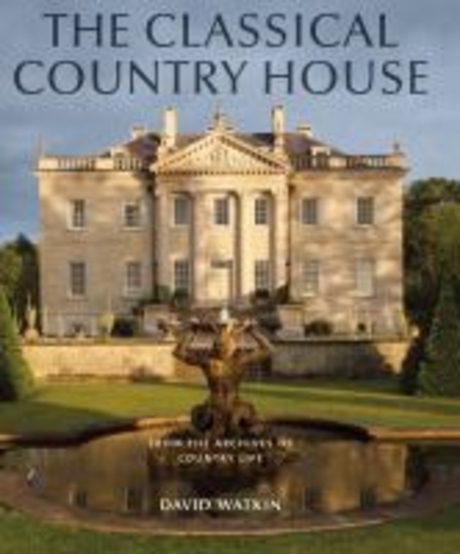
David Watkin is an Emeritus Fellow of Peterhouse and Emeritus Professor of the History of Architecture at the University of Cambridge. He is the author of over twenty books, including Morality and Architecture, A History of Western Architecture, Radical Classicism and Roman Forum. He is a leading authority on Classicism and its successive renewals. - A fresh look at the British Country House, revealing the major influence of Classicism from the 17th century to the present day- Fascinating and detailed surveys of twenty-six of the most important Classical Houses and the architects who designed them- Authoritative text by a leading expert on Classicism and its successive renewals- Over 150 stunning photographs from the unrivalled Country Life archive ?A fresh look at the British Country House, revealing the major influence of Classicism from the 17th century to the present day?Fascinating and detailed surveys of twenty-six of the most important Classical Houses and the architects who designed them?Authoritative text by a leading expert on Classicism and its successive renewals?Over 150 stunning photographs from the unrivalled Country Life archive In The Classical Country House architectural historian David Watkin takes a fresh and innovative look at the traditional British country house and shows how Classicism has been a seminal influence on British architecture since the seventeenth century. He demonstrates how the antecedents of the British Classical house, which lie in both Greek and Roman antiquity, were vigorously revived in the masterpieces of the Italian Renaissance, and enjoyed new life when transplanted to Britain by Inigo Jones, after his Grand Tour of the Continent in 1613-14. The book consists of five parts. The first looks at the birth of English Classicism in the seventeenth century, when houses such as Wilton House in Wiltshire (where Jones and John Webb designed the celebrated Double Cube Room) and Coleshill in Berkshire, reflect a rejection of contemporary styles in favour of a Renaissance-influenced design. The second part shows how the flowering of Classic design in the eighteenth century led to the creation of some of the most celebrated houses of the period: Chiswick House, Holkham Hall, Sir John Soane's Pitzhanger Manor, and the Grecian templar house, Grange Park.The third part recounts how the austerity of many buildings designed in the 18th century gave way to the richer styles of the Italian Renaissance Revival in the 19th century - seen, for example, in Kingston Lacy, Dorset and Brodsworth Hall, Yorkshire. The final two chapters, on the twentieth century and beyond, reveal how even as individual an architect as Sir Edwin Lutyens immersed himself in a Classical language of design, in houses as diverse as Nashdom, Gledstone and the British Embassy in Washington D.C; and how, as the influence of Modernist design has waned, Classical styles have been revived - most notably in the houses of Raymond Erith after the Second World War, and more recently by architects such as Quinlan Terry.David Watkin has selected over 150 of the finest images from the Country Life archive to illustrate an incisive study of 26 major houses and their architects. This highly informative and enlightening survey of Classicism through the centuries is a major addition to architectural history. Over 150 superb photographs from the Country Lifearchive are selected especially here to highlight 25 major houses and their architects in a stunning and astoundingly thorough display With authority and verve, distinguished architectural theorist David Watkin takes a fresh and innovative look at the traditional British country house in this gorgeous illustrated history book. Rather than focus on any given period, he shows instead how classicism has been a seminal influence on British and American architecture since the 17th century through to the waning of modernist design in the present day. Consisting of five parts, sections cover everything from the birth of English classicism to the richness of the Italian Renaissance revival--seen, for example, in Kingston Lacy and Brodsworth Hall. An interesting parallel movement in America is also touched upon that shows how, from Thomas Jefferson's Monticello designs in pre-Revolutionary war times to the stunning 20th-century Villa Vizcaya, Florida, built in 1916, the same persisting respect for classical forms is thoroughly evident. This lovely photographic tome should appeal to anyone interested in the influences that have formed the grand tradition of the British country house. Over 150 superb photographs from theCountry Lifearchive are selected especially here to highlight 25 major houses and their architects in a stunning and astoundingly thorough display With authority and verve, distinguished architectural theorist David Watkin takes a fresh and innovative look at the traditional British country house in this gorgeous illustrated history book. Rather than focus on any given period, he shows instead how classicism has been a seminal influence on British and American architecture since the 17th century through to the waning of modernist design in the present day. Consisting of five parts, sections cover everything from the birth of English classicism to the richness of the Italian Renaissance revival--seen, for example, in Kingston Lacy and Brodsworth Hall. An interesting parallel movement in America is also touched upon that shows how, from Thomas Jefferson's Monticello designs in pre-Revolutionary war times to the stunning 20th-century Villa Vizcaya, Florida, built in 1916, the same persisting respect for classical forms is thoroughly evident. This lovely photographic tome should appeal to anyone interested in the influences that have formed the grand tradition of the British country house.